Fiber laser cutting machine
A sheet metal laser sized the way we size everything else: pick the laser power and cutting area your parts actually need, keep the accuracy claims honest, and leave the voltage configurable — because the wall socket in your shop is rarely the one in the catalogue.
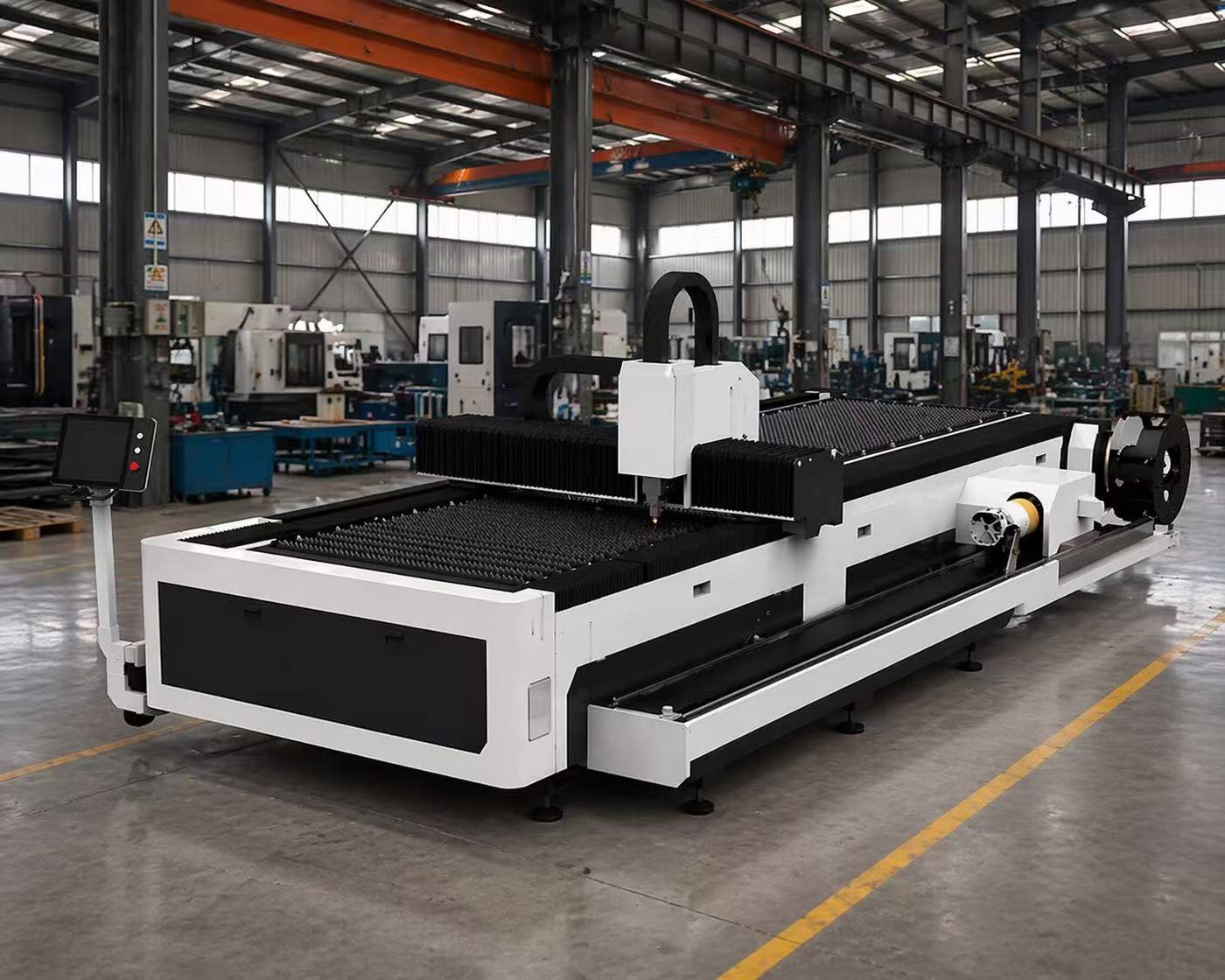
What this machine is
A fiber laser cutting machine cuts sheet metal with a focused laser beam instead of a mechanical tool. There is no tooling to change per profile, no punch to wear, and the same program that cuts one part cuts the next one differently — which is why lasers have become the default process for mixed, low-volume sheet metal work.
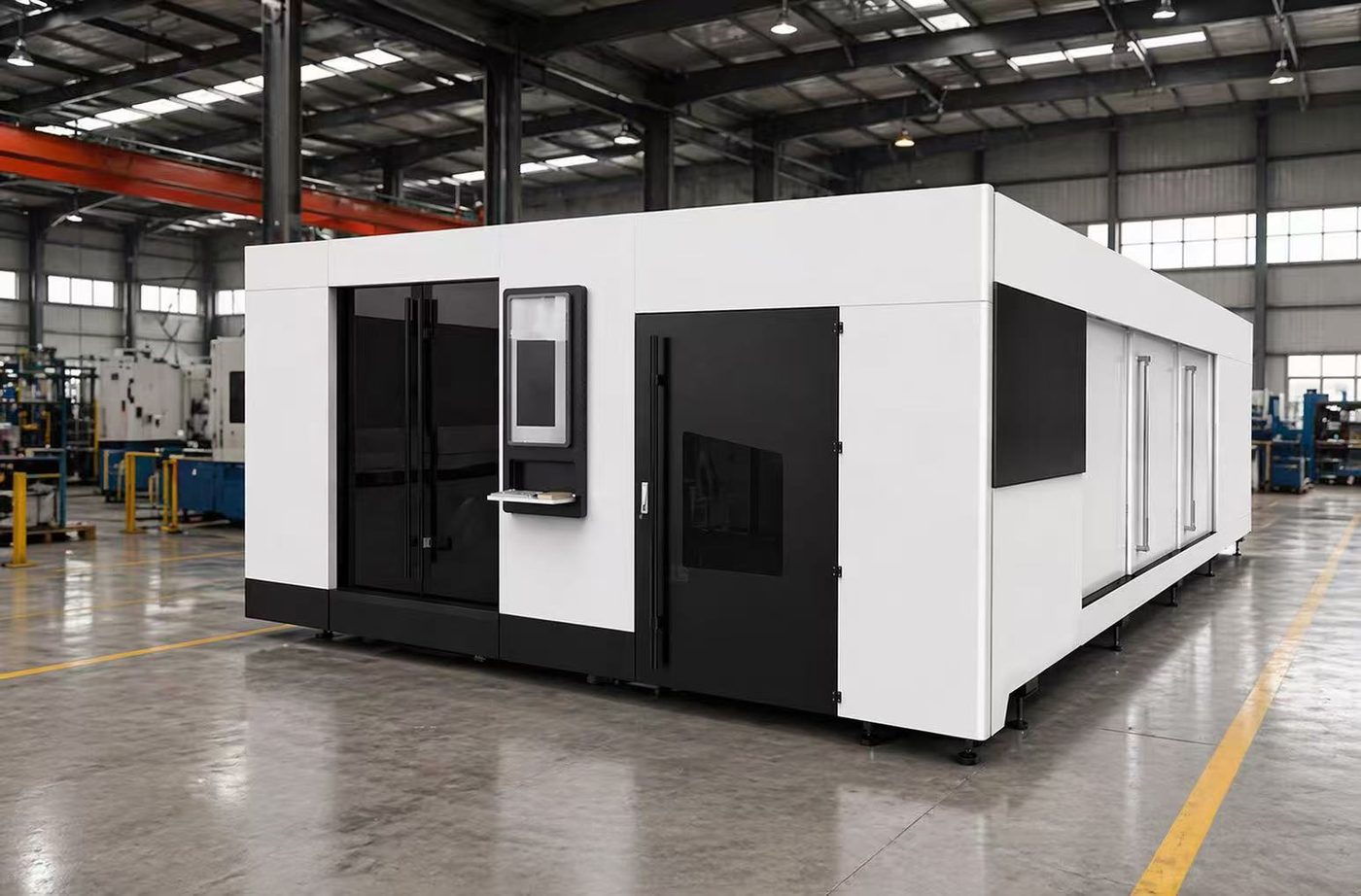
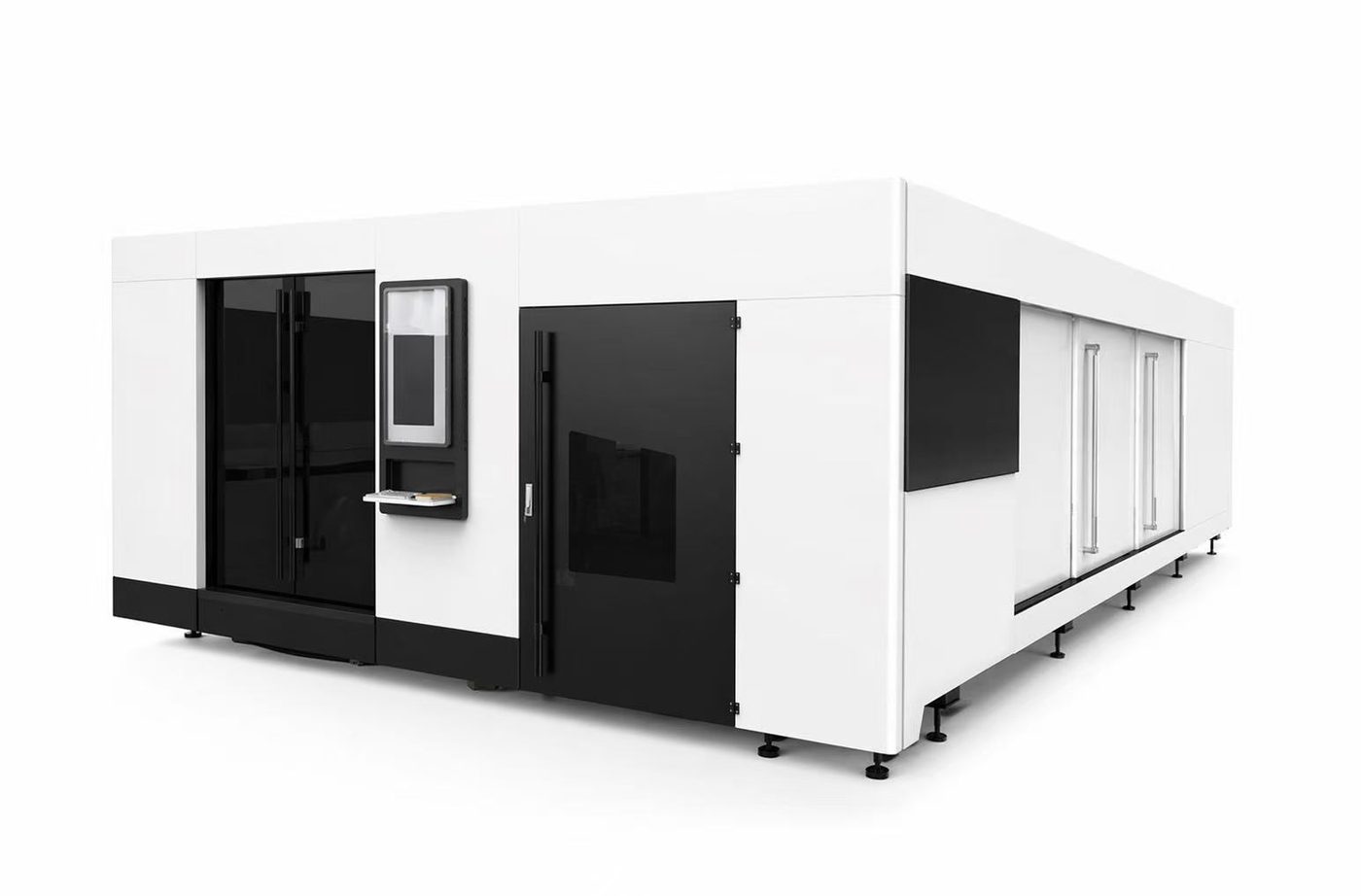
We build these in four laser power levels —1500W, 3000W, 6000W and 12000W — across four cutting areas (3 x 1.5 m, 4 x 1.5 m, 6 x 1.5 m and 4 x 2 m), in both fully enclosed and open platform configurations. The specification below is the standard machine; special models are custom-built to order.
Specifications
| Item | Standard specification |
|---|---|
| Laser power | 1500W / 3000W / 6000W / 12000W |
| Cutting area | 3 x 1.5 m / 4 x 1.5 m / 6 x 1.5 m / 4 x 2 m |
| Maximum travel speed | 120 m/min |
| Maximum acceleration | 1.2 g |
| Positioning accuracy | +/-0.05 mm |
| Repeat positioning accuracy | +/-0.02 mm |
| Working voltage | 380V 50Hz / 380V 60Hz / 220V 60Hz / custom |
| Cooling | Water-cooled |
The above are standard machine models. Special models can also be customized.
Reading the specification as a buyer
Spec sheets list what the machine can do; they do not tell you which option fits your shop. The short version of how each line above actually lands in a workshop:
Laser power: 1500W to 12000W
Power sets how thick a material you can cut at production speed and quality. Higher power also buys headroom on reflective and harder alloys. The honest selection method is to work from your own material mix — typical thickness, typical alloy, parts per month — because a 6000W machine running thin sheet all day is capital spent on a capability you never use, while a 1500W machine fed mid-range plate spends its life at the edge of its envelope.
Cutting area: 3 x 1.5 m to 4 x 2 m
The cutting area decides how much of a sheet you can nest in one pass. A wider bed means more parts per cycle, fewer pierces per part, and less sheet handling — the productivity gains come from nesting, not from speed alone. If you run standard 4 x 8 ft sheets, the 4 x 2 m area takes a full sheet with margin; if your stock is smaller, the narrower beds keep the footprint and the price in proportion.
120 m/min and 1.2 g
Rapid travel matters most on pierce-heavy work: every internal feature starts with a pierce, and the time between pierces is travel time at rapid. High acceleration keeps that travel short on small, dense nests. It is the number that separates a fast machine from a slow one on the same job — not the cutting speed itself, which is set by material, thickness and gas.
+/-0.05 mm positioning, +/-0.02 mm repeatability
Repeatability is the number that shows up in your parts: it is what keeps the twentieth bracket in a nest the same as the first. Positioning accuracy matters when a program has to hit a marked position on the sheet. As with any accuracy claim, ask what conditions it was measured under before comparing it against another supplier's figure.
Voltage and cooling
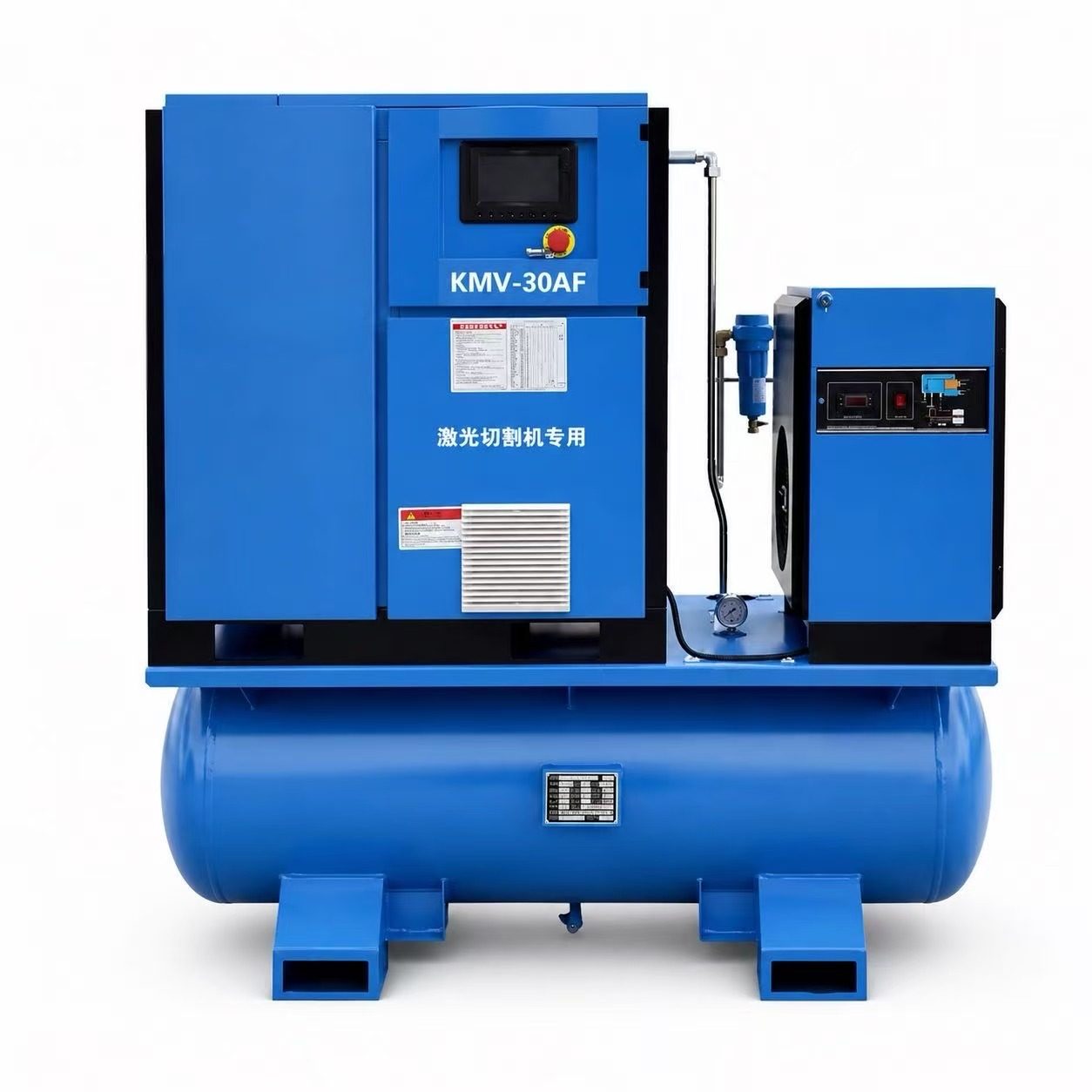
Standard machines are 380V at 50 or 60 Hz; 220V 60 Hz and custom voltages are available. Sort the electrical scope before the machine ships — it is far cheaper than reworking an installation. The machine is water-cooled: the chiller needs floor space and a supply, and the cutting gas circuit needs compressed air on site.
Two enclosure configurations
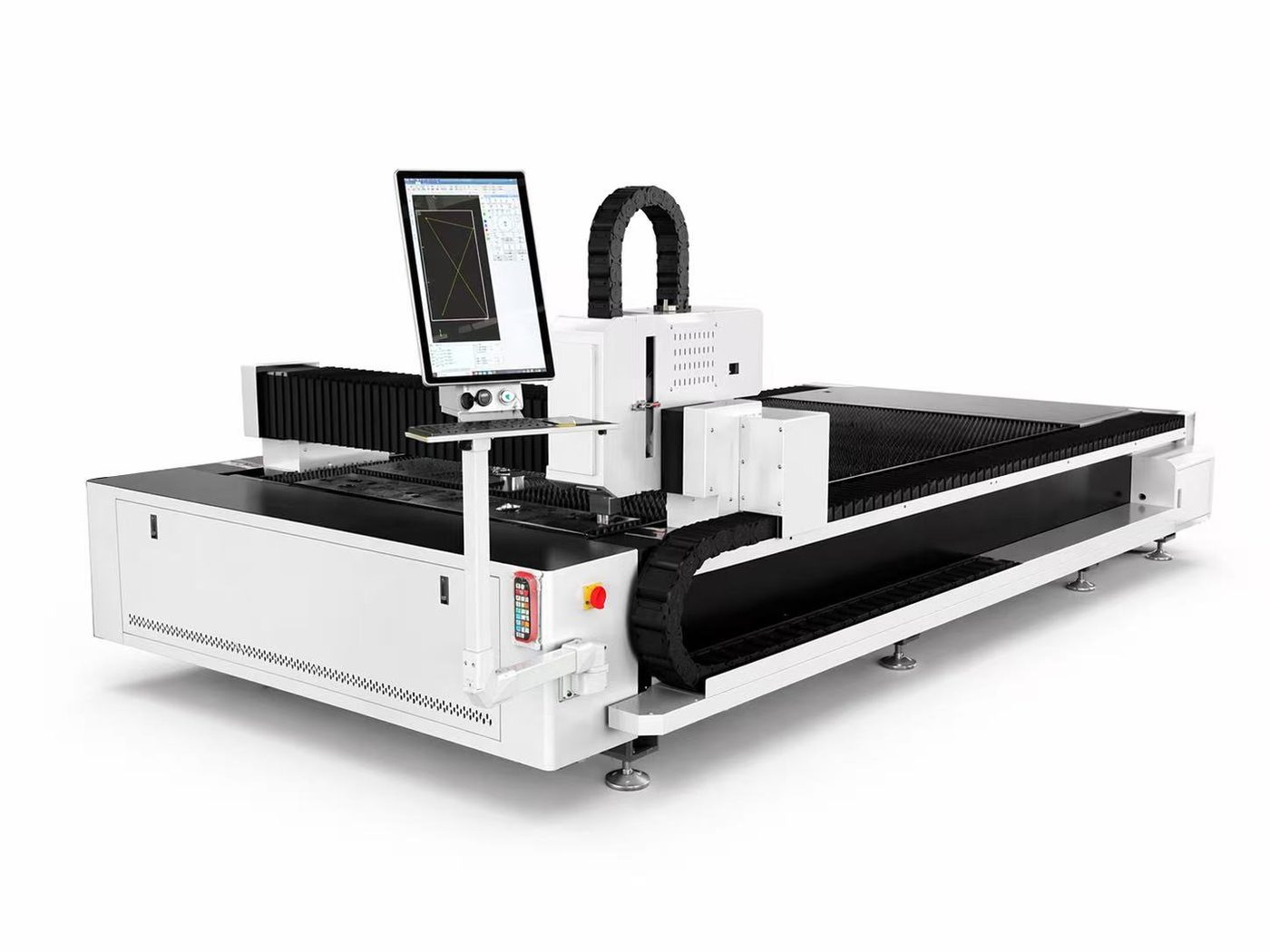
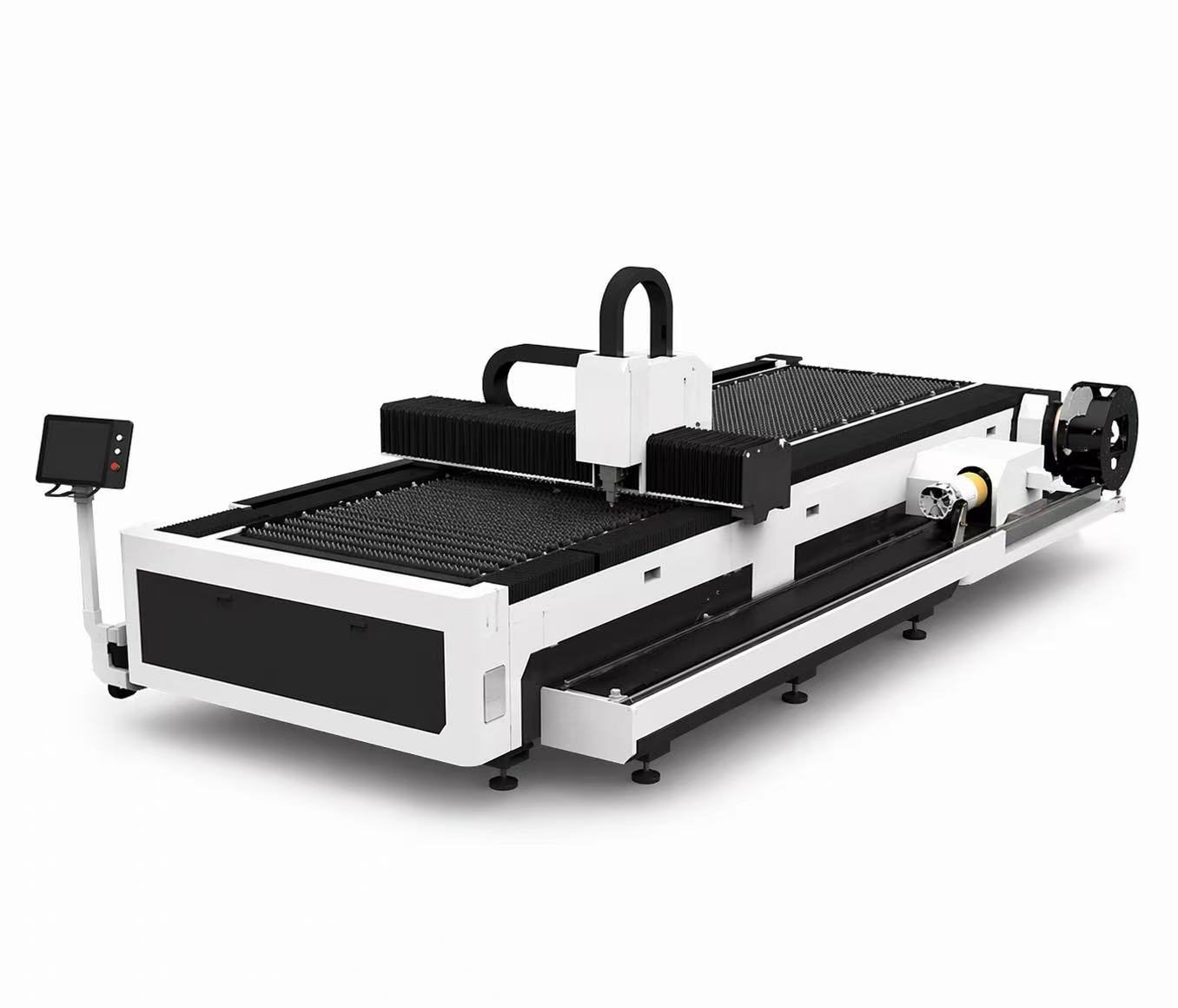
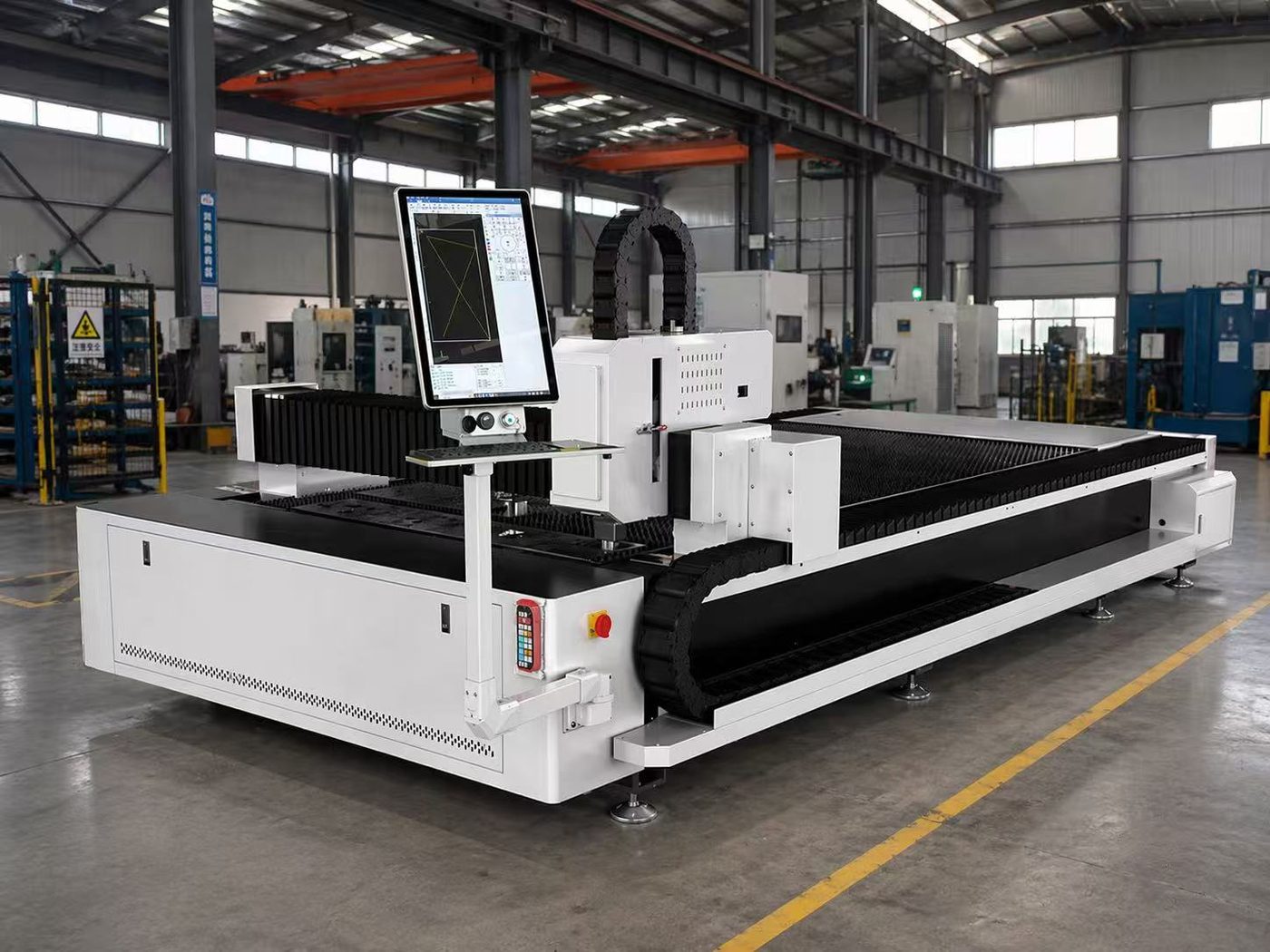
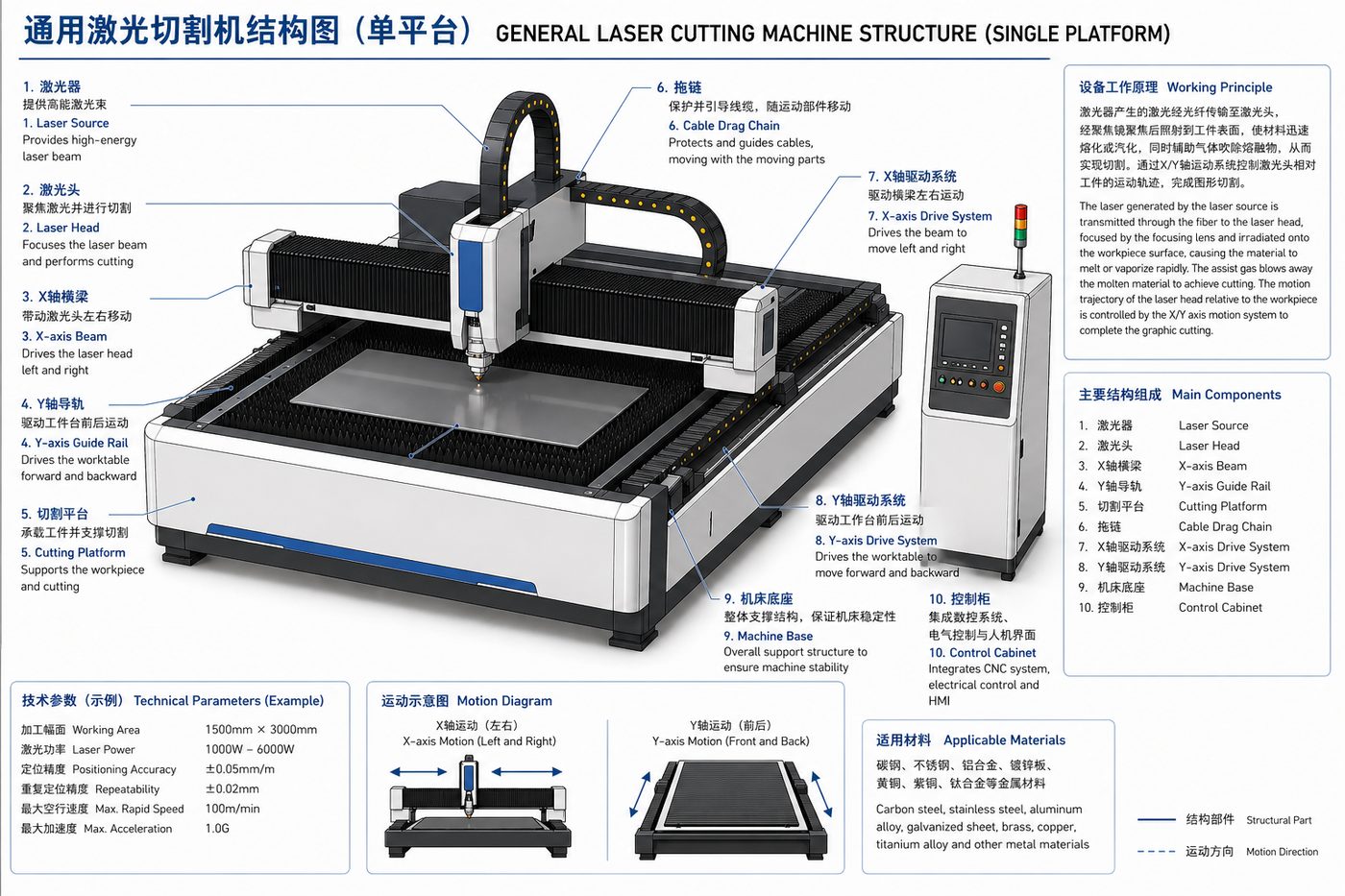
The fully enclosed machine covers the whole cutting area. That structure is what makes the zoned dust extraction effective, keeps fume and noise contained at the machine, and suits a shop where the laser sits among people and other processes. Theopen (single platform) machine gives unrestricted access to the table — loading long sheets and heavy stock by hand or crane is simpler, and nothing overhangs your sheet.
Choose by how the machine sits in your shop, not by the catalogue: enclosed where the environment needs containing, open where access to the table matters most.
Machine structure
The parts of the machine that decide whether it still cuts straight in year five:
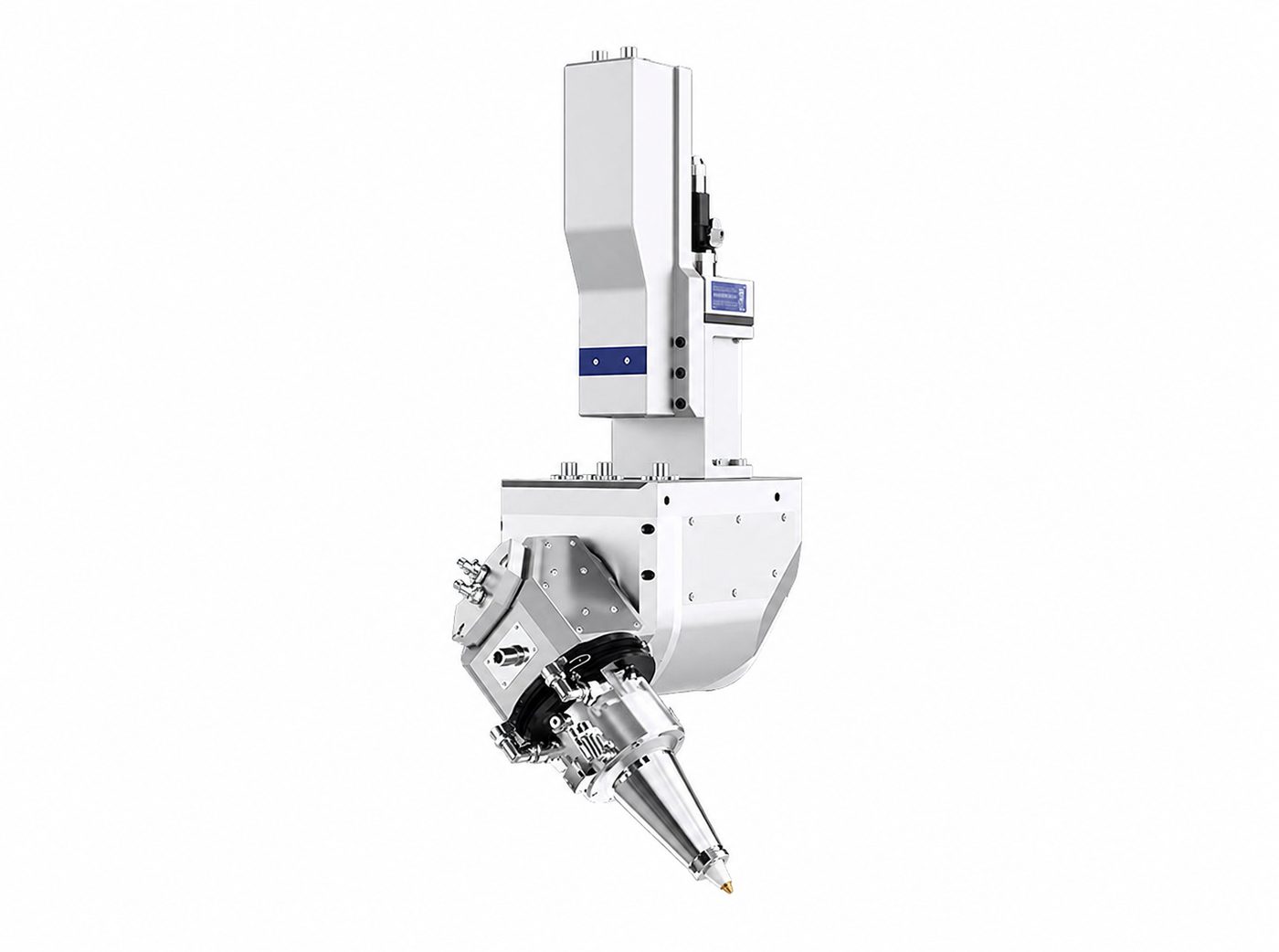
Beam (cross member)
The beam carries the cutting head along the X axis. It is designed by finite element analysis to balance rigidity against moving mass, made from high-performance manganese steel with butt-welded construction, and heat-treated after welding so it keeps its strength, rigidity and shock resistance — and does not deform — over long service.
Machine bed
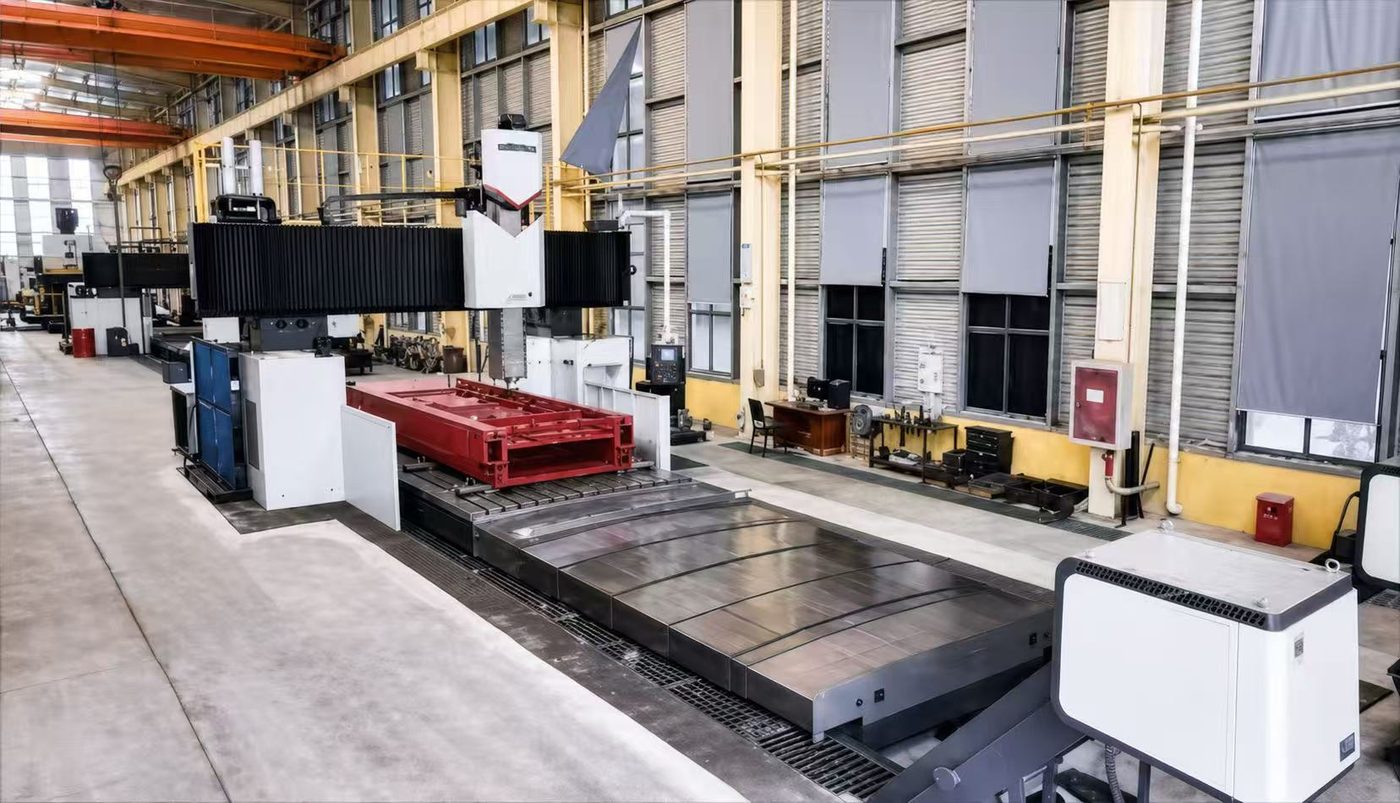
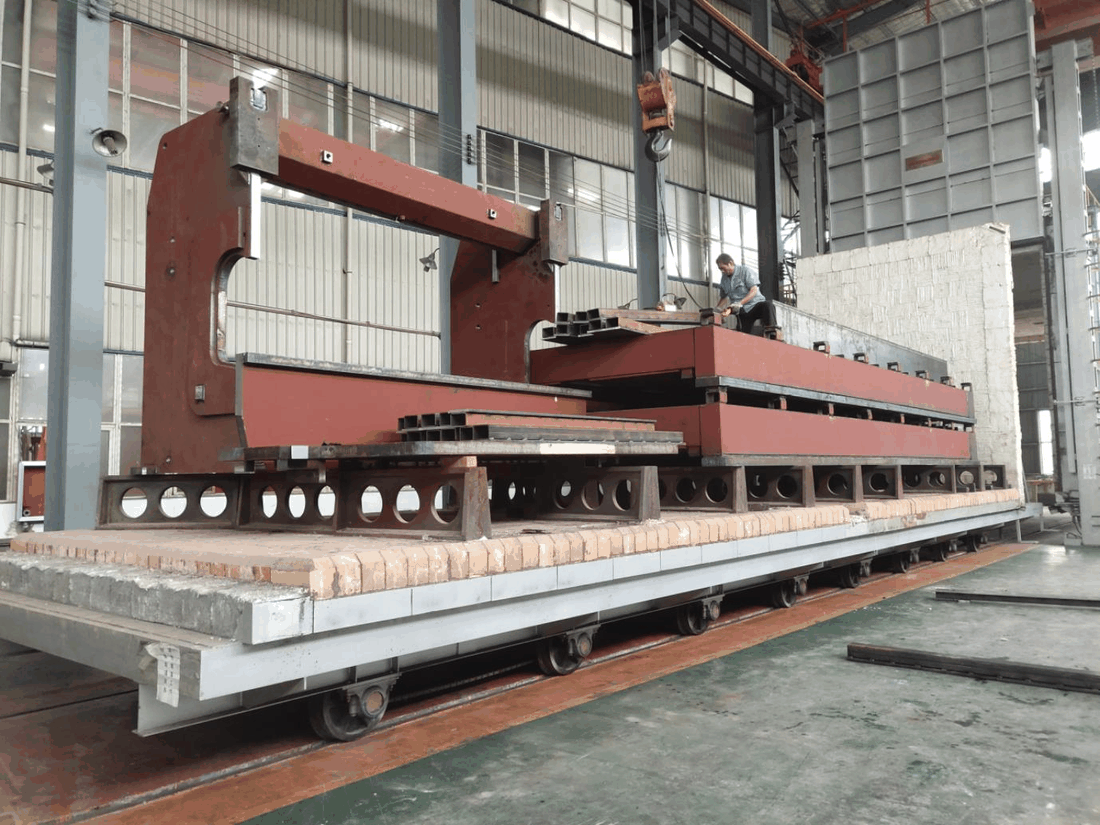
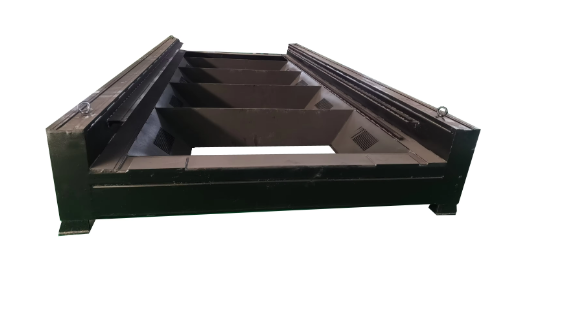
The bed is welded from multiple rectangular tubes with internal stiffeners for overall strength and tensile performance. The internal structure combines a hollow design with a fish-scale anti-burn backing that protects the table surface from spark damage during cutting. The welded body goes through high-temperature annealing and high-speed shot peening, with stress-elimination treatment on top, so the frame does not deform in service — the factory states the bed holds its geometry even after twenty years of use. This is the step that decides whether the machine still cuts straight in year five, and it happens before the racks, beam and head go on.
Laser source
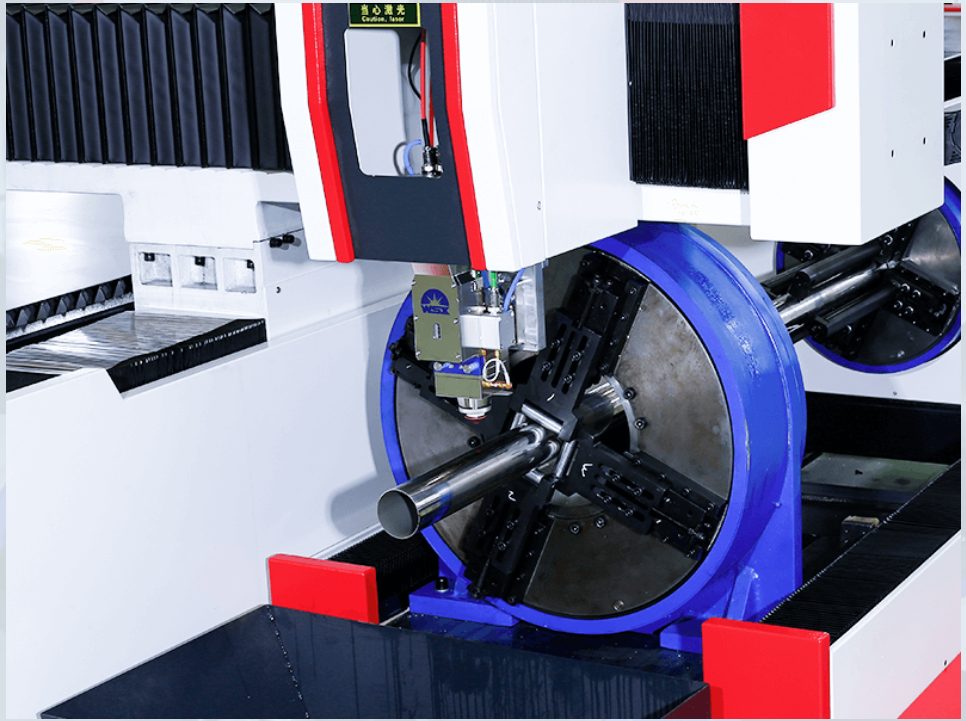
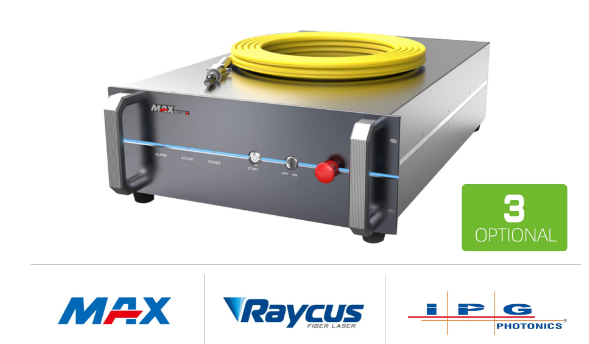
The laser source is selectable: Raycus (China), n-Light (USA) orIPG (Germany), from 1000W up to 20000W. Across the full power range the beam parameters (BPP) stay constant, which keeps the spot small and the beam quality stable as you move between power levels — the difference shows up as consistent cut quality on thin material at low power and on thicker plate at high power, instead of a beam that changes character with the setting. Electro-optical conversion efficiency is above 30%, and the modular plug-and-play design keeps the unit compact and straightforward to install and maintain.
Cutting head
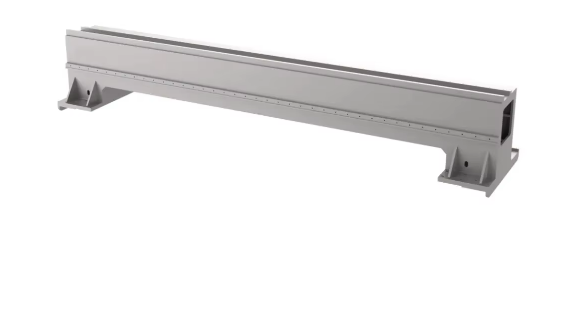
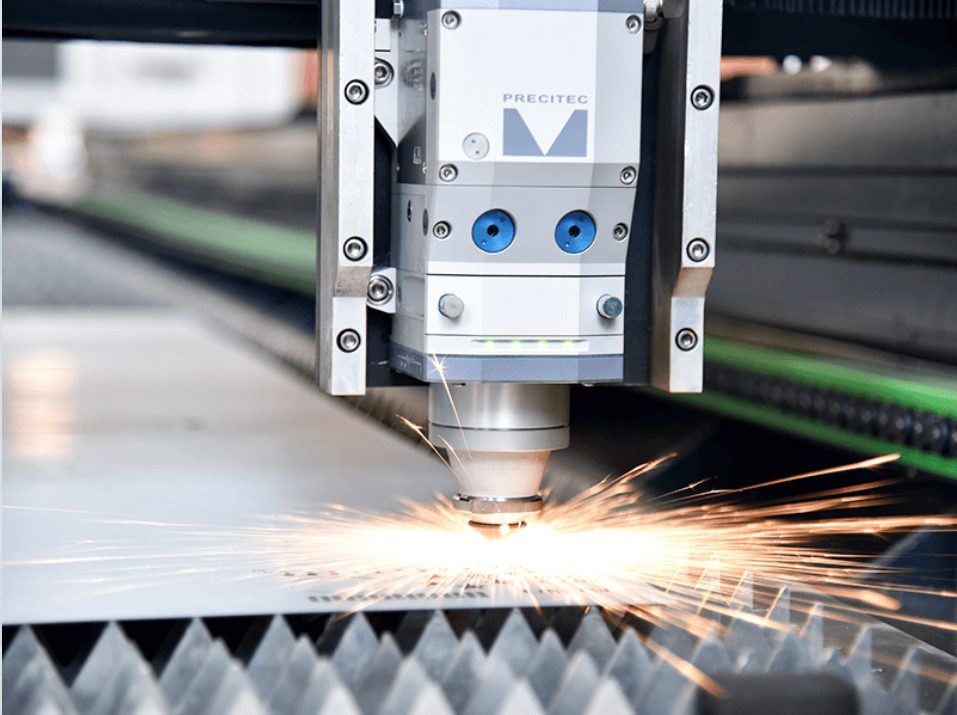
The automatic-focus cutting head adjusts focal length to the thickness of the material being cut, so one setup handles a mix of gauges without manual refocusing — shorter setup time between jobs and consistent standoff on every thickness. The head carries a patented anti-collision protection structure, which matters on a machine that runs unattended through a nest: a tipped or bowed sheet is a collision event, and the protection decides whether that is a pause or a head replacement. A micro-joint technique for the remnant skeleton keeps thin sheet from bowing during cutting, which is what holds the part in place through the last few cuts.
Chiller
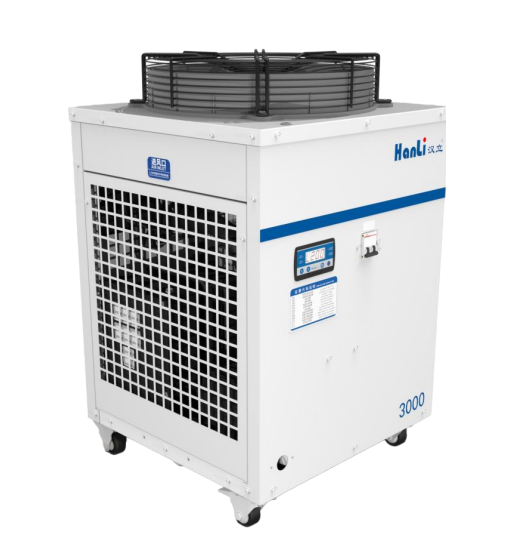
The laser source and the optics run on a closed water circuit, held by a dual-temperature, dual-control chiller with +/-0.3 C temperature control accuracy. It carries the protection set you want on a water circuit: compressor delay protection, water flow alarm, and high/low temperature alarms. Water cooling is what lets the laser hold power through a long nest without thermal drift.
Dust extraction and safety
Extraction is zoned: the cutting table is divided into multiple independent suction zones and the machine opens the zone under the cutting head, following it across the table, instead of pulling the full table volume all shift. Smoke is captured where it is generated, extraction runs more economically, the machine's core components stay protected, and the workshop air stays cleaner.
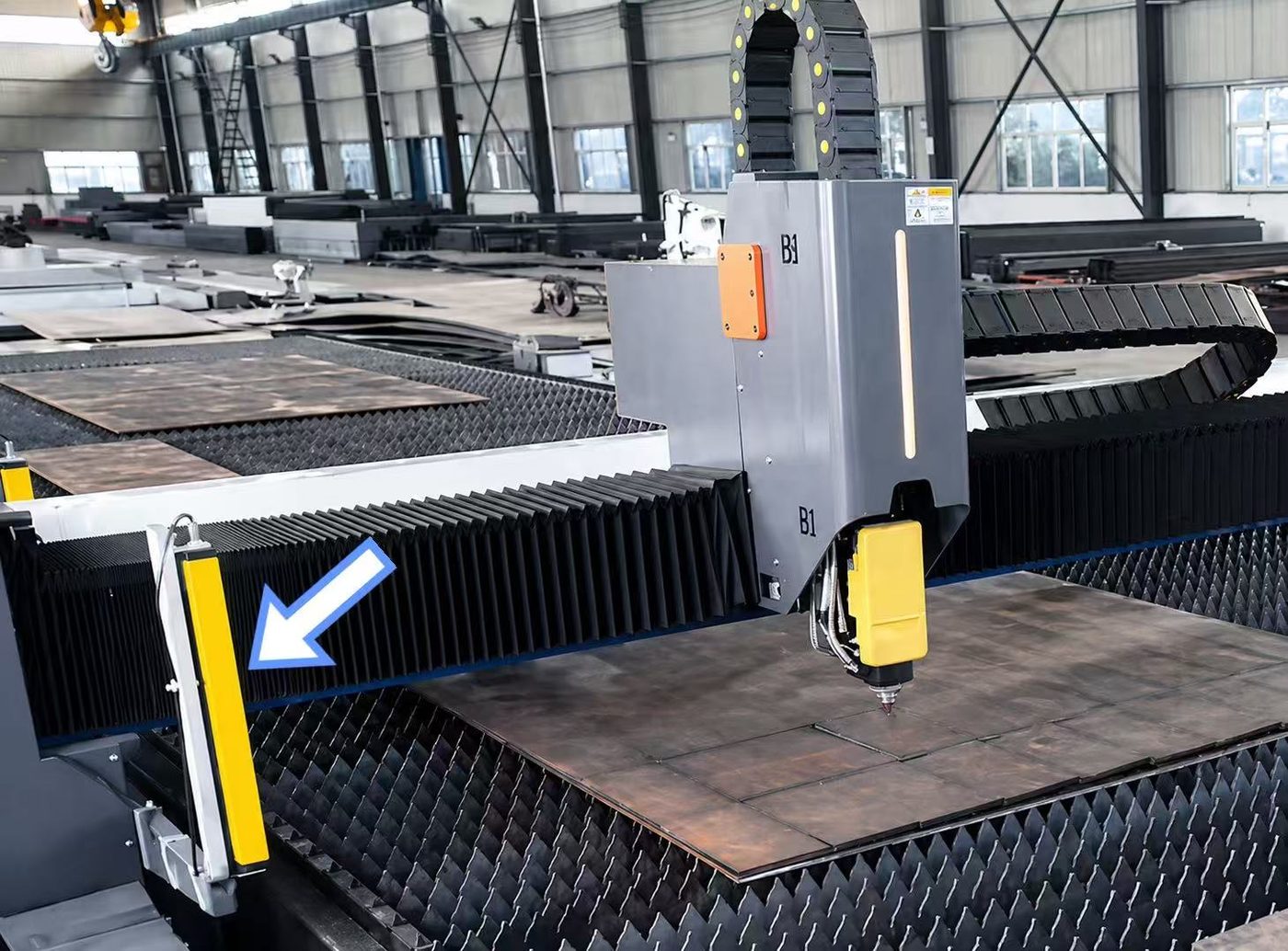
For personnel protection, the optional safety light curtain forms an infrared screen across the cutting area and openings: if a person or object breaks the beam, the machine performs an emergency stop, shuts the laser and stops motion — protection against laser exposure, mechanical impact and flying waste at the same boundary.
Electrical cabinet and pneumatics
Primary electrical components are Schneider or equivalent imported joint-venture brands. The cabinet is cooled by a dedicated air cooler that holds the internal temperature down so the contactors and drives see a stable environment — heat is what shortens electrical life in a factory hall.
The air compressor supplies the high-pressure air behind the cutting gas: it blows slag and impurities clear of the cut for a clean surface, keeps the protective lenses free of dust and contamination, and drives the machine's pneumatic accessories. It is the one utility that quietly decides both cut quality and consumable life.
Automatic loading (option)
For shops running the laser as a production cell rather than a job machine, automatic feeding removes manual loading: the machine feeds sheet continuously, keeps positioning accurate and the cut quality stable, reduces sheet damage and material waste, and runs safer without an operator at the table — the configuration for high-volume automated production.
Bevel cutting (option)
Where welded fabrications need prepared edges, the bevel option cuts 360-degree multi-angle profiles — plain bevels, V and Y profiles — in a single pass, with no secondary grinding or slotting. The cut face stays flat and accurate, which suits the welding processes that follow, and removes a manual operation from the shop.
Control system
The control is a professional PLC industrial computer with a graphical interface, running cutting software that takes designs straight from the drawing packages your shop already uses — CAD, CorelDraw and similar — and cuts them immediately. The CNC cutting control program is developed on the Windows system and integrates fully with the CNC control system, which keeps real-time control of machine and laser straightforward and makes software upgrades quick.
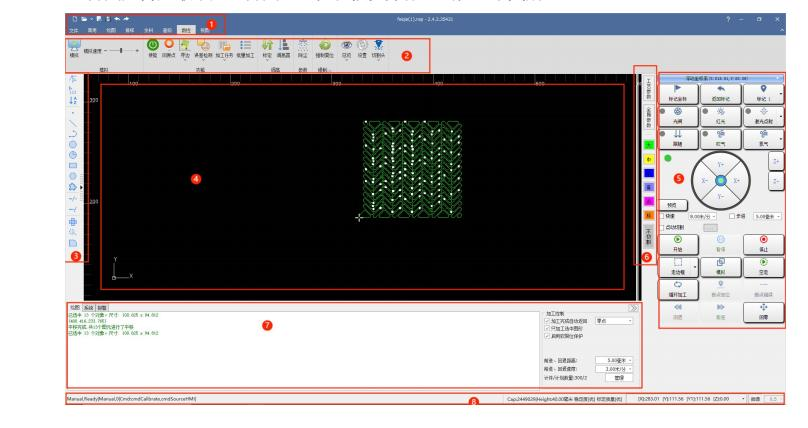
CypCut is the fiber laser cutting software developed for these machines. It installs and commissions quickly, adjusts cutting speed automatically as power changes, and supports independent lead-in speed settings — with a complete cutting process database behind it. What it does in practice:
- File import. Reads AI, DXF, PLT and Gerber graphics data, and accepts the international-standard G-code from MasterCam, Type3 and similar software.
- Automatic optimisation on import. Opening a DXF triggers duplicate-line removal, merging of connected lines, deletion of micro-features, automatic inside/outside part distinction and sequencing — each step can be customised or run manually.
- Editing and nesting. Scaling, rotation, alignment, copy, grouping, smoothing and merging, with WYSIWYG setup of lead-in and lead-out lines, kerf compensation, micro-joints, bridges and overcuts. Inside/outside distinction sets the kerf compensation direction automatically, with lead-in checking.
- Curve work. Curve splitting, merging and smoothing, text-to-curve conversion, part merging and ungrouping, with flexible automatic and manual sequencing — including group-fixed processing order and an interactive order preview that shows the sequence more directly than a simulation.
- Piercing control. Step piercing, progressive piercing and pre-piercing, with separate laser power, frequency, laser mode, gas type, gas pressure and following height for the piercing process and the cutting process.
- Power follows speed. Speed-dependent power regulation, with independent lead-in and lead-out speeds.
- Material library. All process parameters can be saved for reuse on the same material. Breakpoint memory with forward and backward tracing, and the ability to stop and pause, locate any point in a part, and resume from any position.
- Pipe and sheet in one software. The same software cuts round tube and flat sheet with identical programming, including intersecting-line (joint-cut) cutting, height following, automatic edge finding and starting the cut outside the plate.
- Expansion. Up to 15 PLC process editors and over 30 programmable processes, with programmable I/O and programmable alarm inputs.
- Remote control. Wireless handheld pendant and Ethernet control of the system.
Production process
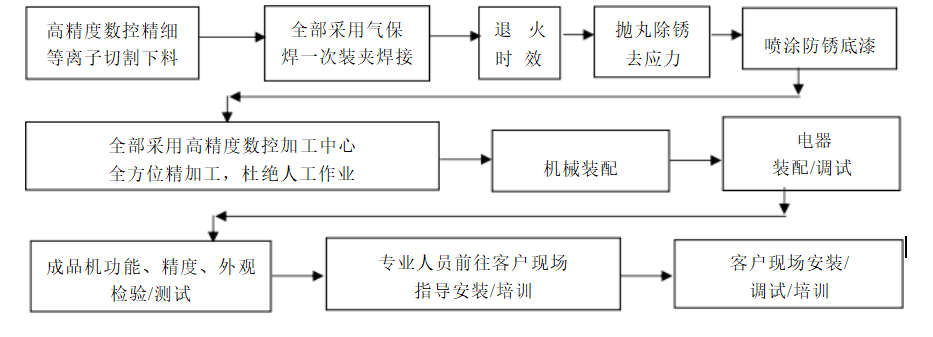
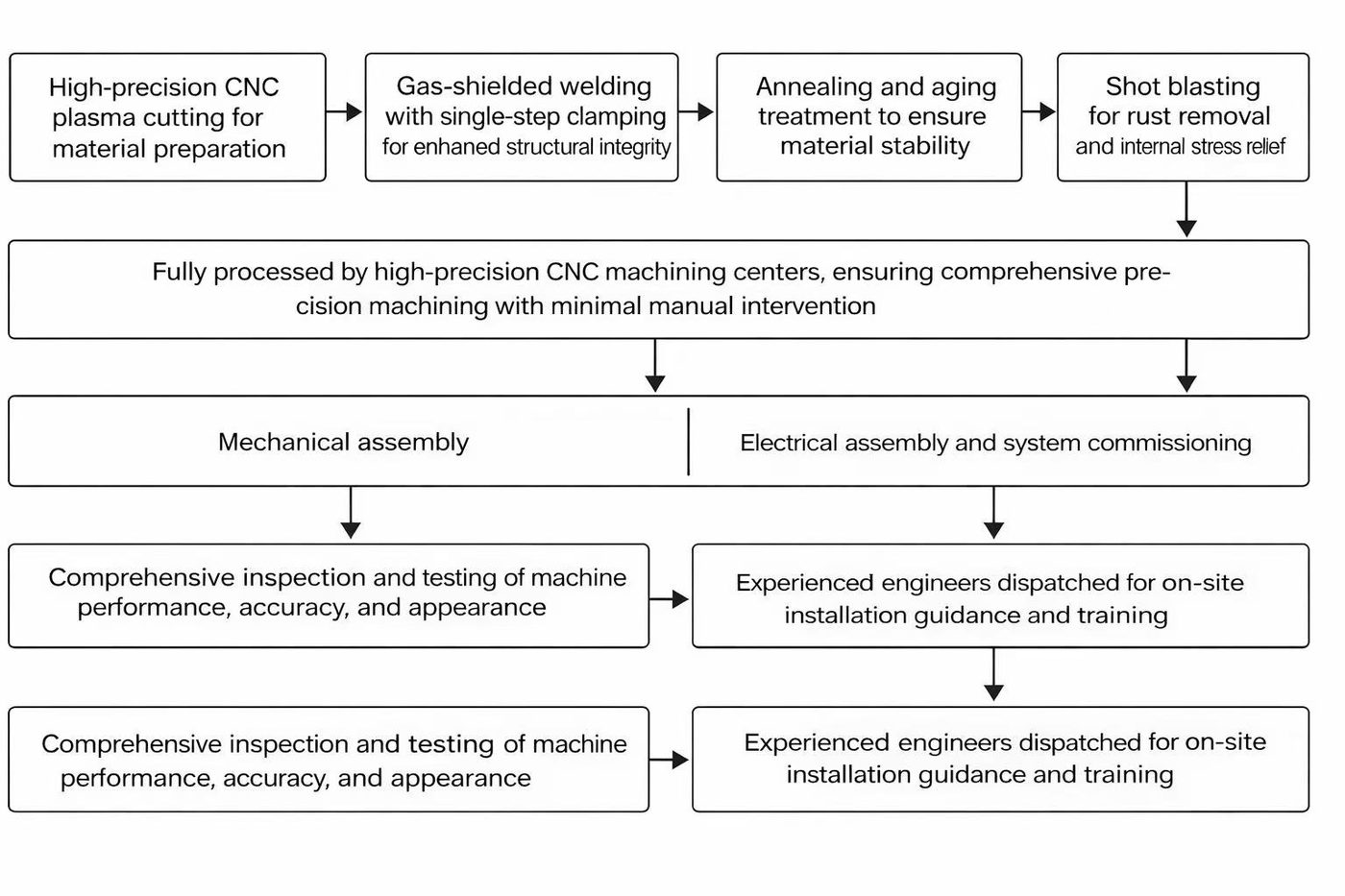
The process matters to you because it is where accuracy is either built in or lost. Frame fabrication and the tempering furnace come before assembly, so stress is relieved before the racks, beam and head go on — not discovered afterwards as a geometry drift you live with.
Standard configuration list
The main components as specified on the standard machine. Component brands are the standard fitment; alternatives are available by agreement.
| # | Item | Qty | Brand / note |
|---|---|---|---|
| 1 | Laser source | 1 set | Raycus |
| 2 | Laser cutting head | 1 set | Jiaqiang / Black Diamond |
| 3 | Machine bed | 1 set | Tempered bed |
| 4 | Linear guide | 1 set | Heng'erda |
| 5 | Rack and pinion | 1 set | Domestic |
| 6 | Servo motors and drives | 1 set | Leadshine |
| 7 | X / Y axis planetary gearboxes | 1 set | Taikemage |
| 8 | Pneumatic control valve | 1 set | Ruisi |
| 9 | Cables | 1 set | Zhejiang Zhaolong |
| 10 | Electrical components | 1 set | Chint / Schneider |
| 11 | CNC system | 1 set | Bochu 4000E |
| 12 | Industrial computer | 1 set | Jiuyan |
| 13 | Precision chiller | 1 set | Hanli |
| 14 | Chuck | 1 set | Full-stroke 240 pneumatic chuck |
| 15 | Pipe fittings | 1 set | JS (Germany) |
| 16 | Lubrication pump (optional) | 1 set | Domestic |
| 17 | Protective light curtain (optional) | 1 set | Keli / Laien |
Items 16 and 17 are optional. The lubrication pump and the protective light curtain are the two options most shops should cost — automatic lubrication because it removes a maintenance interval that gets skipped, and the light curtain because it changes the safety case for running the machine near other work.
What is included
The machine
One fiber laser cutting machine, in the configuration and options agreed at order.
Standard accessories
| # | Item | Qty |
|---|---|---|
| 1 | Lenses | 10 pcs |
| 2 | Nozzles | 10 pcs |
| 3 | Ceramic body | 1 pc |
| 4 | Portable toolbox | 1 set |
Documentation
| # | Document | Qty |
|---|---|---|
| 1 | Packing list | 1 |
| 2 | Certificate of conformity | 1 |
| 3 | Operating manual (electrical) | 1 |
| 4 | Operating manual (mechanical) | 1 |
| 5 | System documentation | 1 set |
| 6 | Electrical schematics | 1 set |
| 7 | Foundation drawing | 1 set |
Site conditions to arrange before delivery
- Power. 380V +/-10% at 50 Hz, or your agreed custom voltage.
- Ambient temperature. 5-38 C during operation.
- Humidity. 20-80% RH.
- Environment. Away from strong vibration sources and electromagnetic interference sources.
- Atmosphere. No harmful or corrosive gases, no dust.
Water for the chiller circuit and compressed air for the assist gas and pneumatics complete the utility list. We supply the foundation drawing; the foundation itself is built on your side.
Installation, training and after-sales
We run a service network built around the machines we sell, with the aim of giving customers convenient, quality support wherever the machine is installed. The terms, in order:
- Foundation. We provide the foundation drawing; you are responsible for the construction work.
- Shipment notice. When the machine is assembled at our works, we notify you of the shipment schedule and what to prepare for installation.
- Installation and commissioning. Our engineers install and commission the machine at your site, with your cooperation — you provide lifting equipment, water, electricity, hydraulic oil and the necessary conditions.
- Training. During installation and commissioning we train your technical staff free of charge and provide technical consultation. If you need an engineer to travel for debugging, that cost is reimbursed at actuals.
- Acceptance. On completion, both parties inspect and accept the machine jointly against the signed technical agreement and its attachments.
- Warranty. The machine is covered by a three-guarantee policy from the date of sale, with a three-year quality guarantee from the date of acceptance. Within the warranty period, component damage not caused by the user is replaced free of charge; wearing parts are excluded. After the warranty period expires, lifetime service continues at cost.
What it cuts
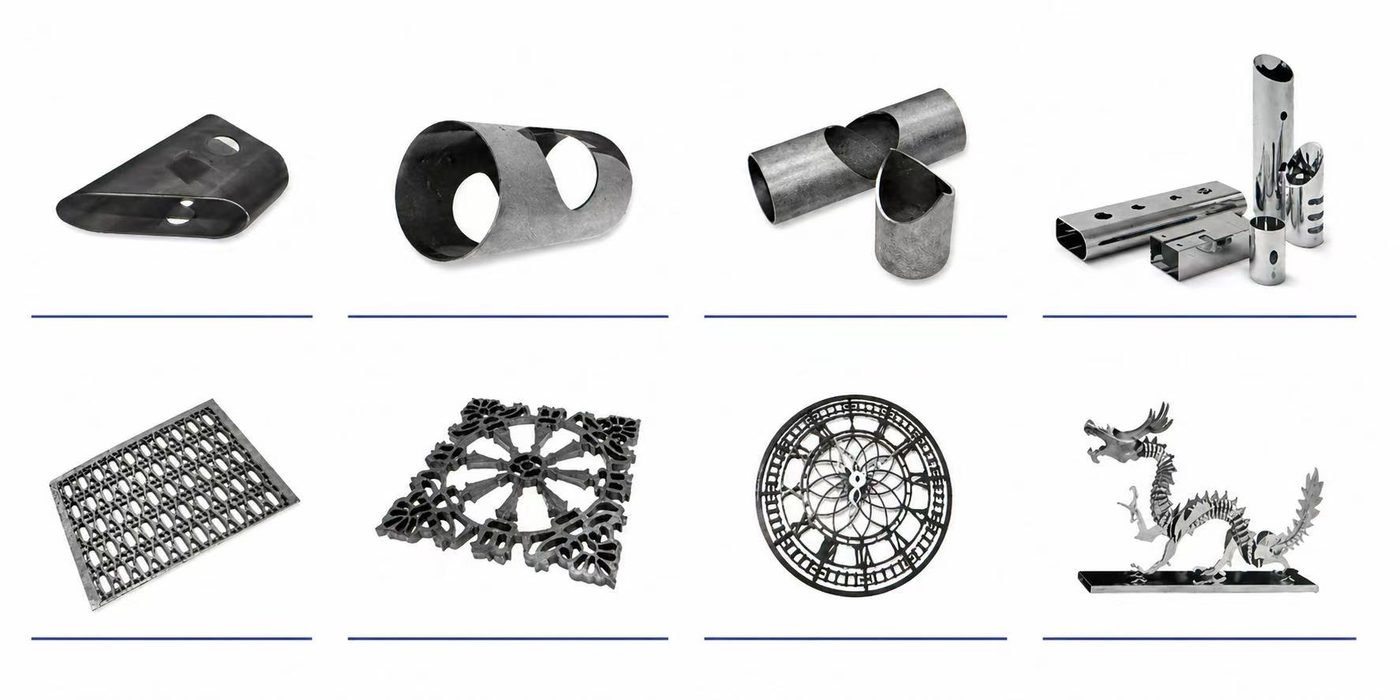
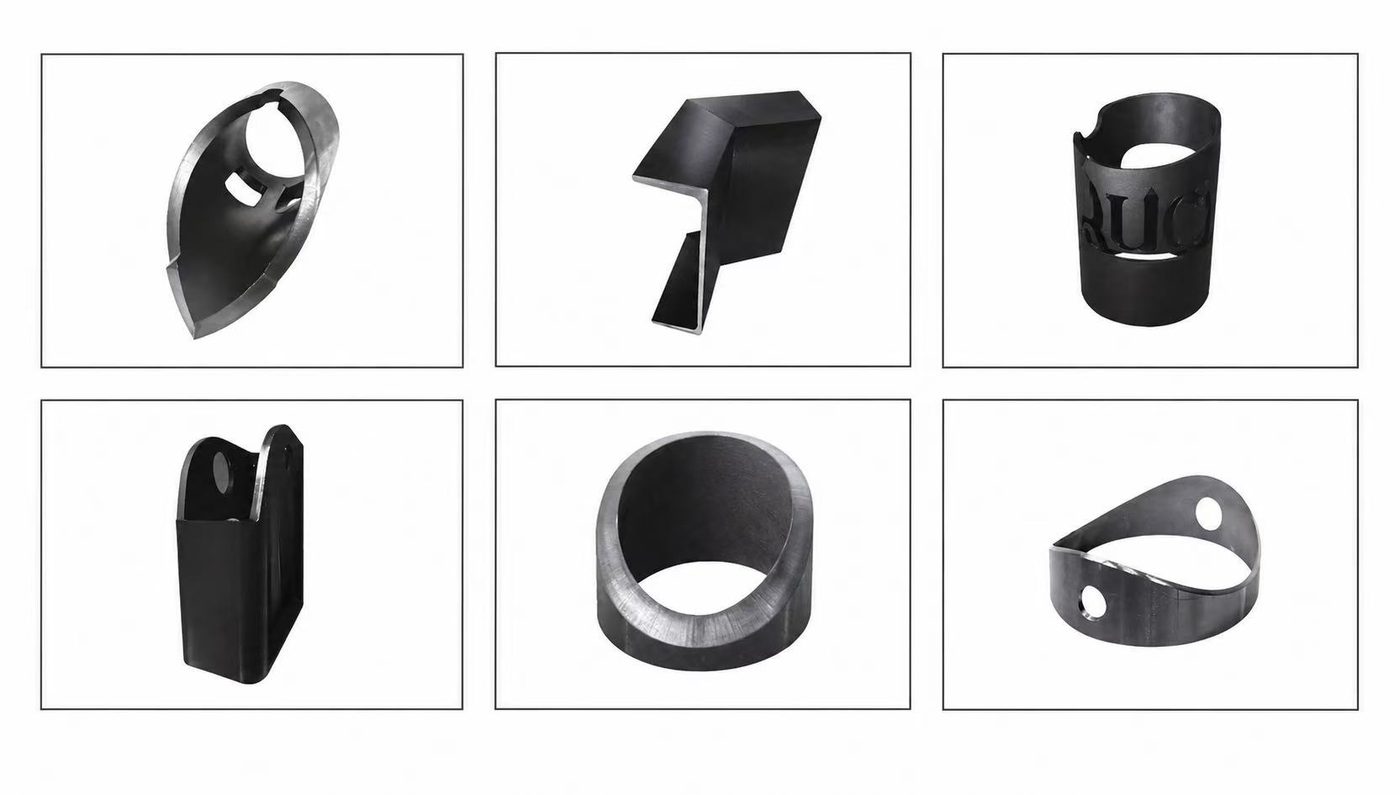
Nested sheet parts, brackets, enclosures, gears, brackets and profiles — the machine is at its best on mixed work where a press tool would need changing per part and a laser just needs the file.
Questions buyers ask
Which laser power should I choose — 1500W, 3000W, 6000W or 12000W?
Power is matched to the material and thickness you cut most, not to the biggest plate you have ever seen. The four options span thin sheet at speed through mid-range plate; the right answer depends on your alloy mix (mild steel behaves differently from stainless and aluminium) and your typical thickness. Send us your material, typical thickness range and monthly volume, and we will recommend a power level against your parts rather than selling you the top of the list.
What cutting area do I need?
The standard areas are 3 x 1.5 m, 4 x 1.5 m, 6 x 1.5 m and 4 x 2 m. Size it to the sheets you buy and the nests you run: a wider bed lets you nest more parts per cycle and cuts your pierce count per sheet, which is usually where the productivity is. If you run standard 4 x 8 ft stock (about 1.22 x 2.44 m), the 4 x 2 m area handles full sheets with margin.
What power supply does it need?
Standard machines run 380V at 50 Hz or 60 Hz; 220V 60 Hz and custom voltages are available on request. Tell us your service — voltage, phase and available current — before ordering, because it changes the electrical scope of the installation. The machine is water-cooled, so you also need floor space and a supply for the chiller, plus compressed air for the cutting gas circuit.
How accurate is it?
The published figures are +/-0.05 mm positioning accuracy and +/-0.02 mm repeatability, at 120 m/min maximum travel speed and 1.2 g acceleration. Repeatability is the number that matters day to day — it is what keeps a nested batch of parts consistent. As with any accuracy claim, ask what test conditions it was measured under before comparing it against another supplier's figure.
Enclosed or open platform — which is right for my shop?
Both are built. The fully enclosed machine contains the cutting area: it keeps dust and fume extraction effective, cuts noise at the operator position, and suits shops with limited separation from other work. The open (single platform) machine makes loading long sheets and heavy stock simpler and gives you unrestricted access to the table. If you cut a lot of long sheet by hand, the open platform is the practical choice; if the machine sits among people and other processes, the enclosure earns its structure.
What comes with the machine?
The machine itself, plus a consumables starter set (10 lenses, 10 nozzles, 1 ceramic body and a toolbox) and the full documentation set: packing list, certificate of conformity, electrical and mechanical operating manuals, system documentation, electrical schematics and the foundation drawing. Custom models beyond the standard specification are available on request.
What warranty and service do I get?
Machines carry a three-year quality guarantee from the date of acceptance inspection, under a three-guarantee policy. Within the warranty period, component failures not caused by the user are replaced free of charge — wearing parts are excluded, as they are on every machine of this class. After the warranty period, lifetime service continues at cost. Installation and commissioning at your site are done by our engineers with your cooperation, including free training for your technicians during the commissioning period.
What do I need to prepare before installation?
We supply the foundation drawing; the foundation itself is built on your side. You provide lifting equipment, water, electricity and the site conditions: 380V +/-10% at 50 Hz (or your agreed custom voltage), an ambient temperature of 5-38 C during operation, relative humidity of 20-80% RH, a location away from strong vibration and electromagnetic interference sources, and an atmosphere free of harmful or corrosive gases and dust.
Related
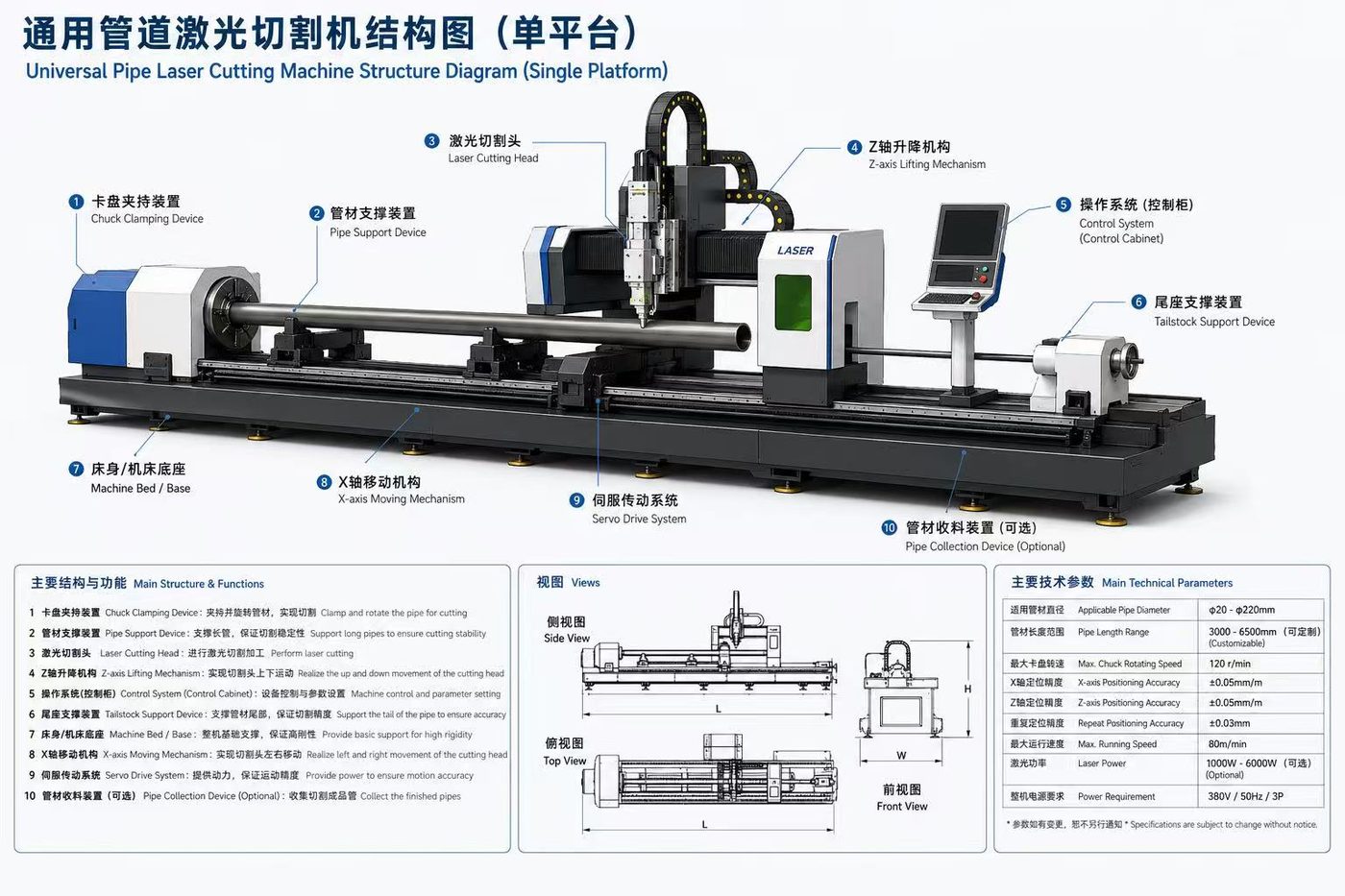
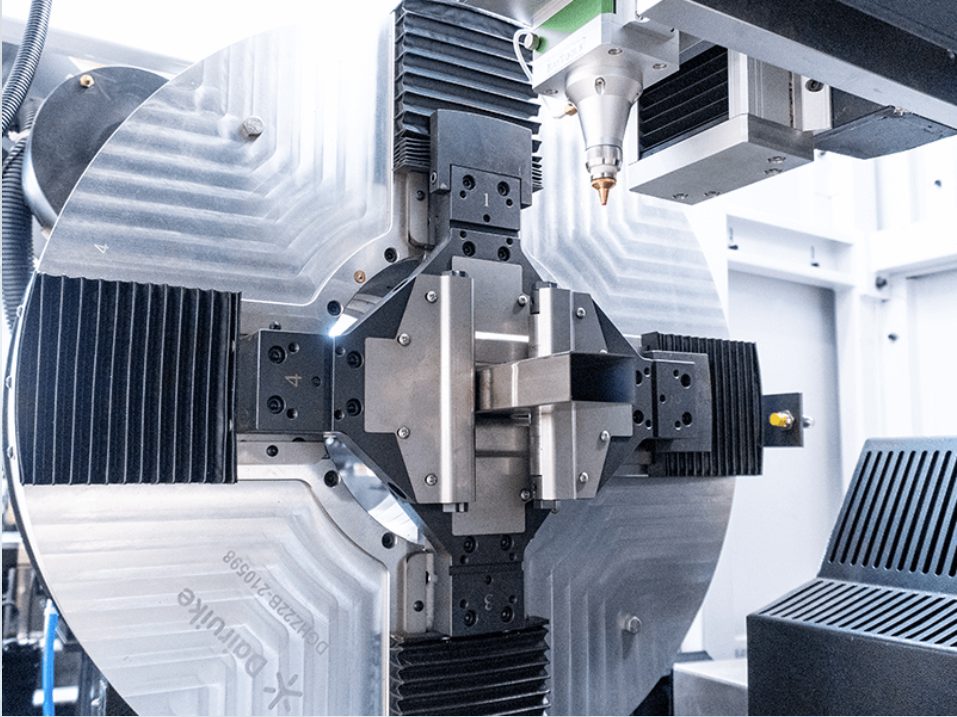
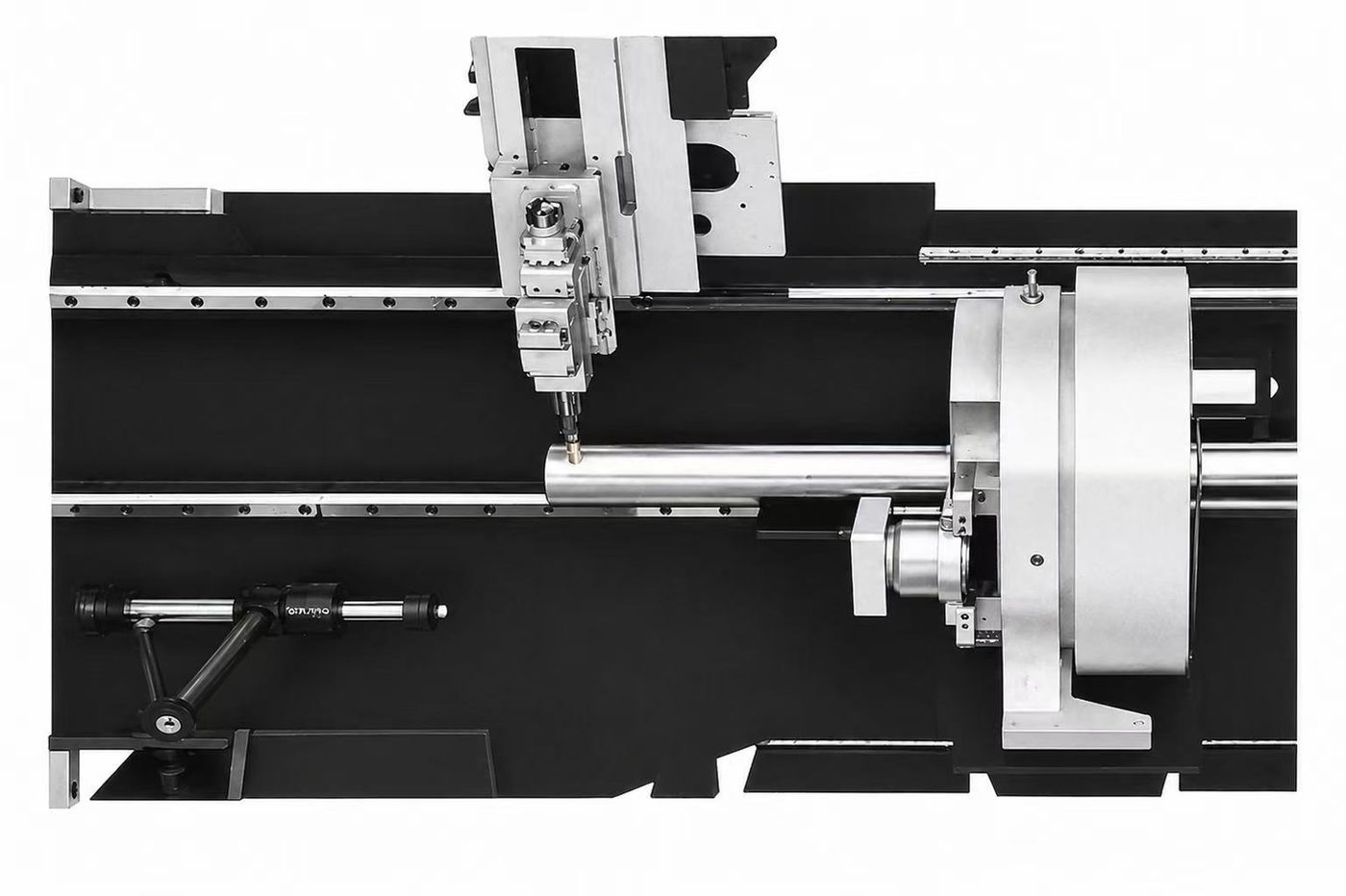
- Laser tube cutting machine — for round, square, oval and rectangular tube from 20 mm to 200 mm.
- Sheet and tube laser cutting machine — both processes on one bed.
- CNC hydraulic press brake — the bending side of the same workflow.
- Importing machinery from China — freight, duty and lead time, line by line.
- What to prepare before delivery — the site checklist.
Pending input from the factory: Photographs of the specific configuration the customer is quoted, per-machine test cut report (material, thickness, speed, gas, edge quality), and the customer reference for the special-part case study.
Ask about the fiber laser cutting machine
Send the part you need to bend and we will come back with a configuration and a quote.