Press brake retrofit & upgrades
Your press brake still bends. What it does not have is a control that programs the bend, a backgauge that holds position, or a tooling system you can change in seconds. A retrofit replaces the tired parts — control, backgauge, cabinet, clamping — while the frame, the hydraulics and the press that made the machine worth buying stay where they are.
What we retrofit
Control system retrofit — NC or manual to CNC
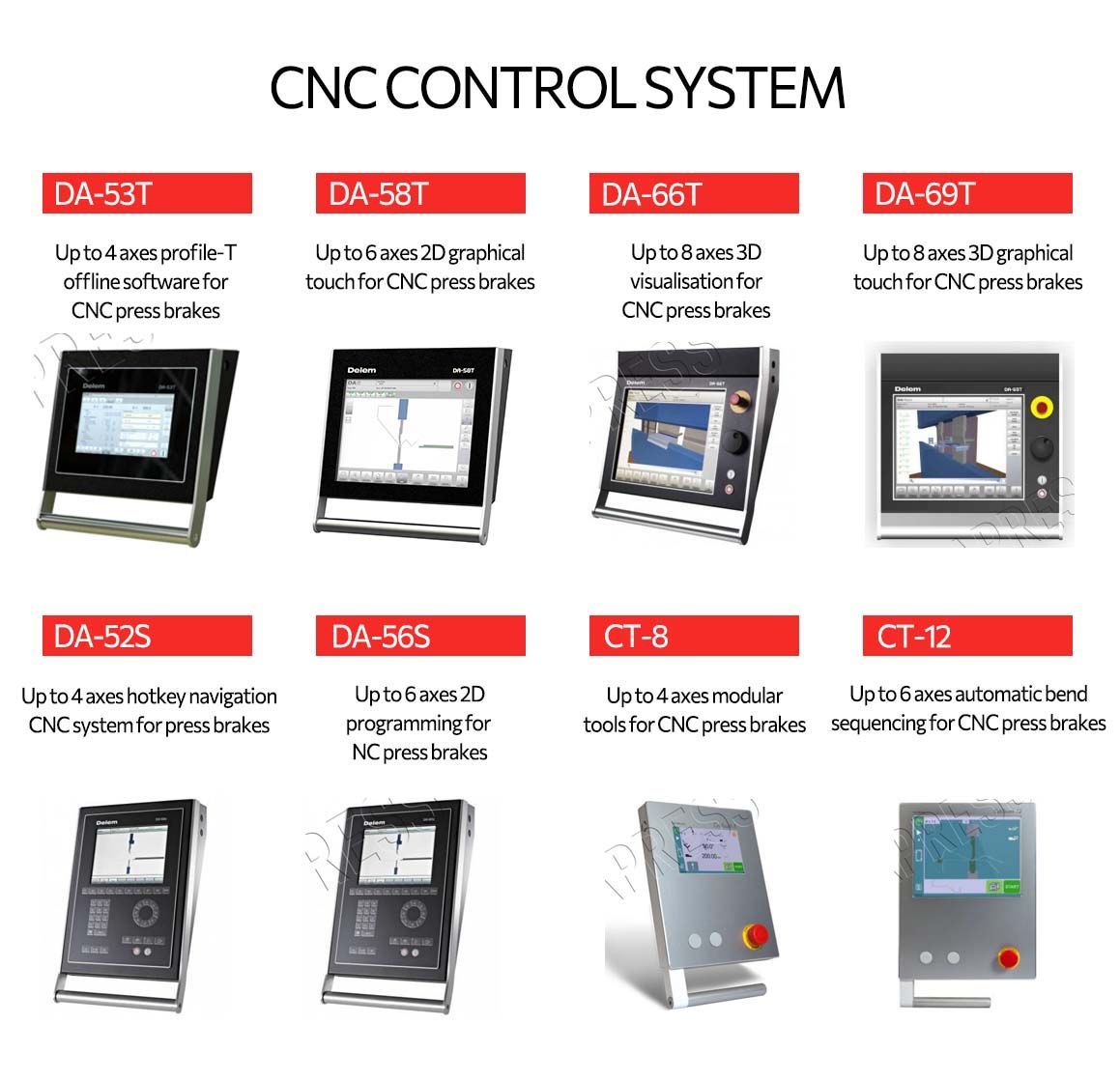
The most common retrofit we do. An old manual or NC press brake gets a new CNC control, and the machine that was limited to one operator setting angles by hand starts running programmed bends.
- New CNC control system with touch screen — from basic 2-axis programming up to multi-axis graphical controls
- New operator panel and electrical cabinet rewiring to match
- Servo valves, encoders and axis wiring for the ram (Y) and backgauge (X / R) axes where the machine is mechanically capable
- Angle correction, crowning compensation and program memory — the everyday functions an NC or manual machine simply does not have
Backgauge system retrofit
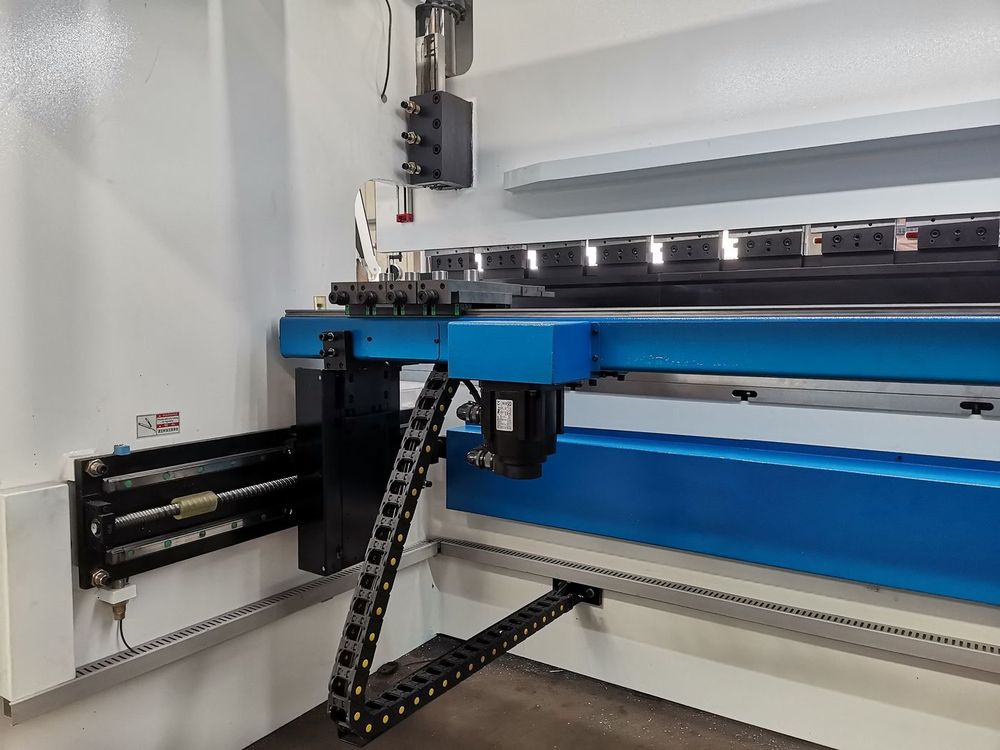
A worn or manual backgauge is the single biggest source of scrap on an older brake. We replace the whole backgauge assembly rather than patching it.
- New backgauge rails, carriage, ball screws and linear guides
- Servo motors and drives for automated X (front-to-back) positioning, with R (height) axis where the part needs it
- New backgauge fingers, and a control that indexes them automatically
- Repeated positioning accuracy that does not drift as the old mechanical linkage wears
Electrical and drive retrofit
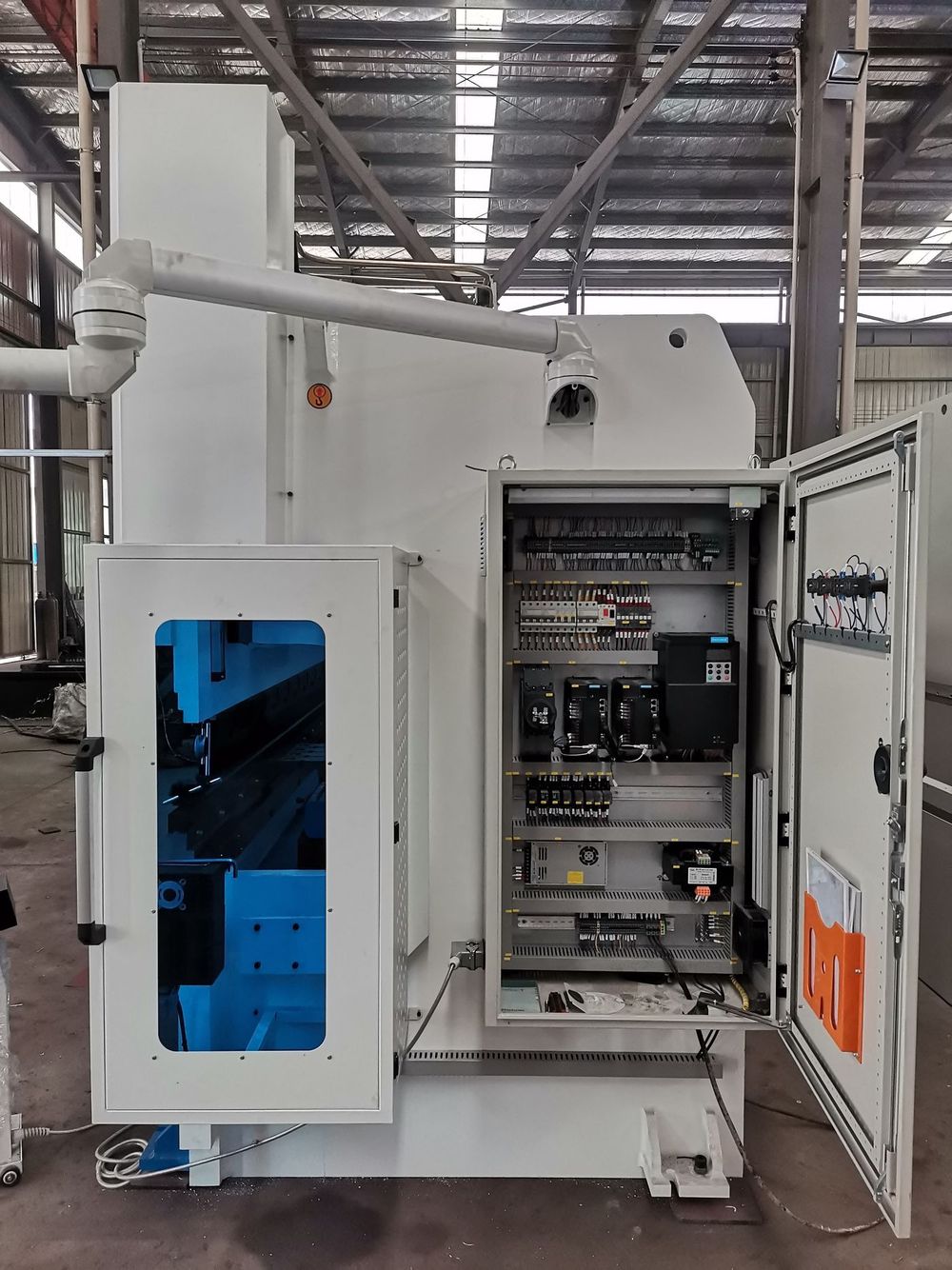
A new control needs a new electrical heart. We rebuild the cabinet so the machine is safe, serviceable and documented.
- New electrical cabinet with servo drives, contactors, PLC and protection circuits laid out to a current schematic
- Wiring harnesses re-run to the motors, encoders, valves and limit switches
- Updated hydraulic valve block wiring where the control is to command ram motion and pressure
- As-built schematics handed over with the machine, so the next technician can work on it
Tooling system upgrades
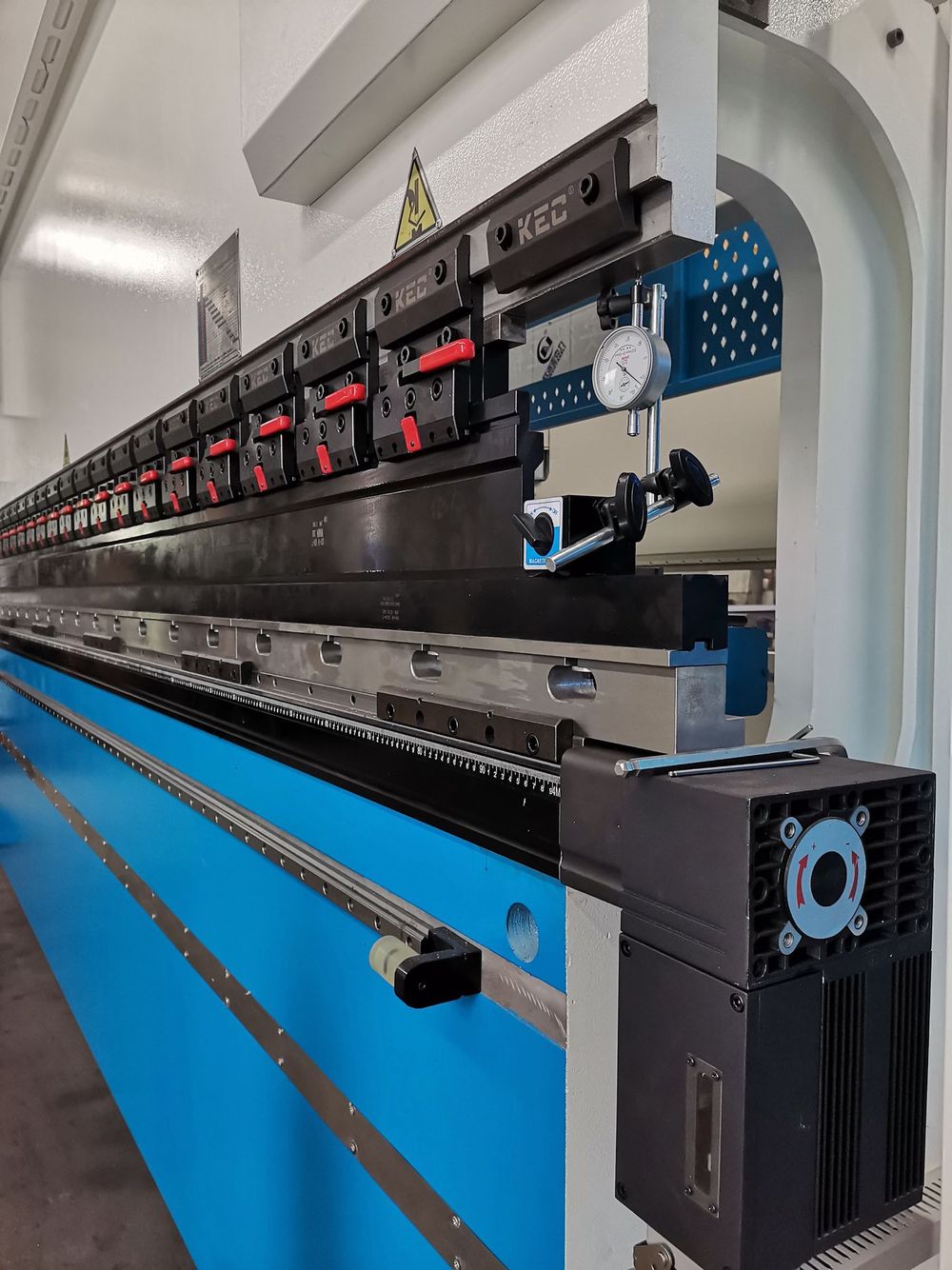
Tooling is where an old machine most often underperforms. These four upgrades are the ones shops ask for most — each changes how the machine holds or presents the tooling, not what the machine fundamentally is.
Multi-V die system → 2-V die system
Multi-V dies cover many V-openings in one block, but every bend pays for the openings you are not using — tonnage per metre goes up, and the radius you get is the radius the die has, not the radius the part needs. Moving to a 2-V die set — one V for thin sheet, one for heavy — cuts the tonnage the machine needs per bend and lets you pick the right radius per job. We supply the die sets and, where the old multi-V holder is worn or non-standard, the matching die holder.
Normal clamps → fast-change clamps
On a standard clamp system every die change is a wrench job: loosen, swap, retighten, re-indicate. Fast-change clamping swaps tooling in seconds, and shops that change dies dozens of times a day get most of that time back. We supply the fast-change clamp assemblies for the ram and the bed, matched to the machine’s existing T-slot and clamp studs.
American-style → European-style clamping
American-style and European-style tooling are two different mounting standards — the clamp geometry, the die holder section and the punch retention all differ, and tooling is not interchangeable between them. Shops that want access to the far wider European tooling range (Wila-style tooling, segmented dies, American-made but European-mount holders) can have the machine converted. We supply the European-style die holders, clamps and punch adapters to suit the machine.
Die risers and die compensation
A worn bed, a re-ground ram or a machine that has been reground after decades of use sits lower than the tooling expects — the die then runs below the correct working height and angles drift. Die risers bring the tooling back to the right working height; die compensation shims close the gap precisely so punch and die line up again. We supply risers and compensation shims sized to the machine and the tooling set.
How a retrofit runs
1. Tell us about the machine
Make, model, year, tonnage, bed length, current control (brand and model), and photos of the machine, the ram clamping area, the backgauge and the electrical cabinet.
2. We check what is feasible
Not every machine should be retrofitted. We confirm what the frame, hydraulics and mechanics can support, and tell you plainly when the honest answer is that a retrofit is not worth it on that particular machine.
3. Retrofit scope and quote
You get a scope listing every part to be replaced, the control or tooling system supplied, and what stays as is — before anything is shipped.
4. Parts, support and commissioning
Parts ship with schematics and a wiring guide. We support the install remotely, and where needed an engineer can attend on site.
Frequently asked questions
Which machines can be retrofitted?
Most hydraulic press brakes from the major builders, and many unbranded machines, can take a control or backgauge retrofit. The questions that decide it are mechanical condition — ram guides, bed, clamping area — and whether the hydraulics can still hold pressure. Send photos and we will tell you.
Can you retrofit a shear or another machine type?
Control and backgauge retrofits are most common on press brakes, but the same approach applies to shearing machines with an NC or manual control. Ask us about your specific machine.
Do I need a new backgauge if I only want a CNC control?
Not always. If the existing backgauge is mechanically sound we can motorise and encode it. If it is worn, a new backgauge assembly is the better spend — we will say which after seeing the photos.
Is the tooling upgrade compatible with my existing dies?
Multi-V to 2-V and die risers or compensation work with the tooling you already own. Converting American-style to European-style clamping changes the mounting standard, so existing tooling in the old standard will not fit the new holders — we will map what carries over and what does not before you commit.
How long does a retrofit take?
The work happens on your machine in your shop — most control and backgauge retrofits are completed in days, not weeks, once the parts are on site. Lead time for the parts is the main variable, and we confirm it in the quote.
Related reading
- Press brake tooling guide: punches, dies and clamping systems — what European, Amada-style, Wila, Trumpf and American tooling actually are, and why they are not interchangeable.
- Used press brake or new? — where a retrofit changes the arithmetic on an older machine.
- CNC hydraulic press brake — when a retrofit is not the right answer and a new machine is.
- Small tonnage press brake — compact new machines, if the old frame is past saving.
Send us your machine details
Photos of the machine, the clamping area, the backgauge and the cabinet — we will check feasibility and send a retrofit scope with the quote.