Laser tube cutting machine
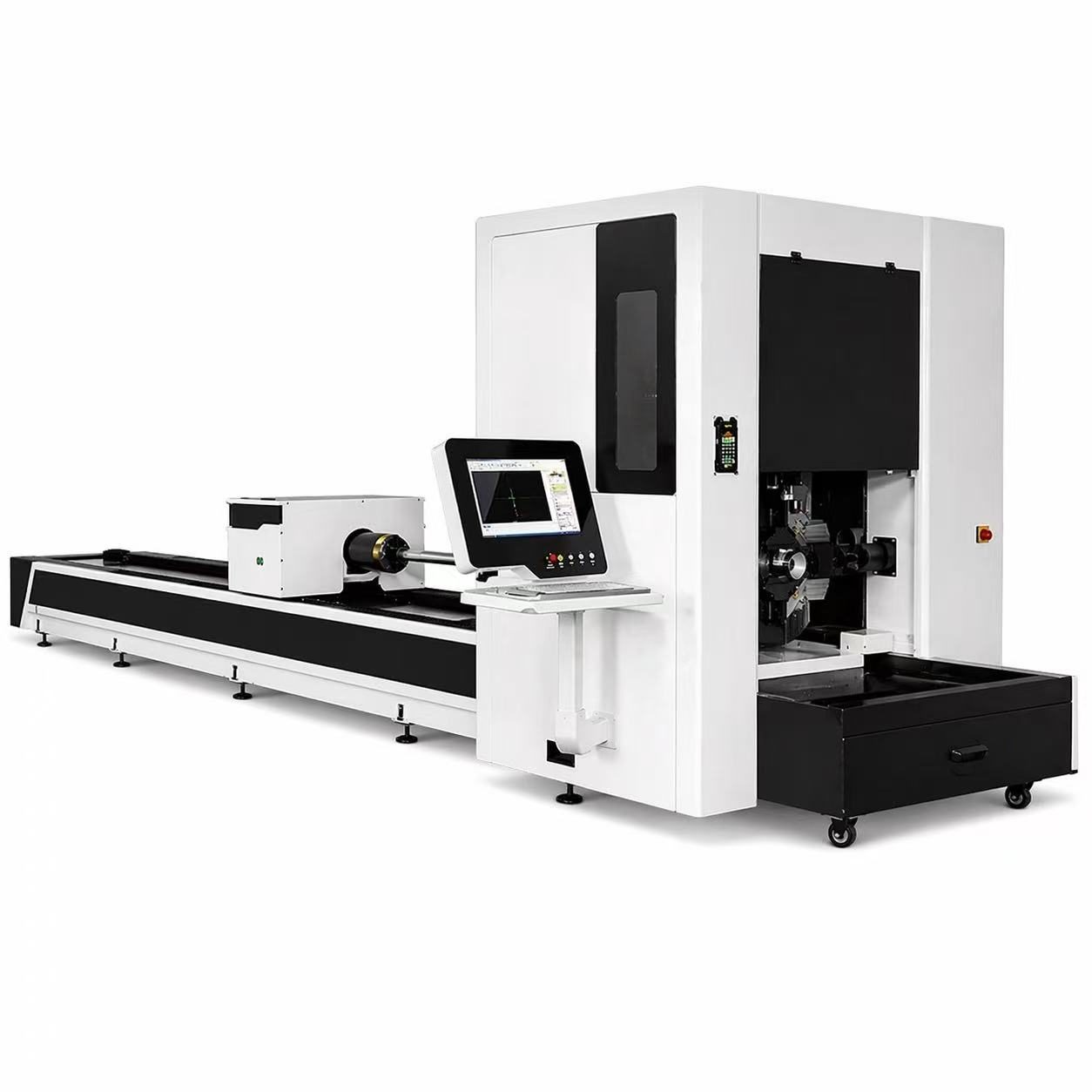
Tube work breaks the assumptions of sheet cutting: the part is held, not supported, and it rotates. This machine is built around that — a full-stroke chuck that holds the whole diameter range without changing claws, and a software that cuts tube and sheet the same way.
What this machine is
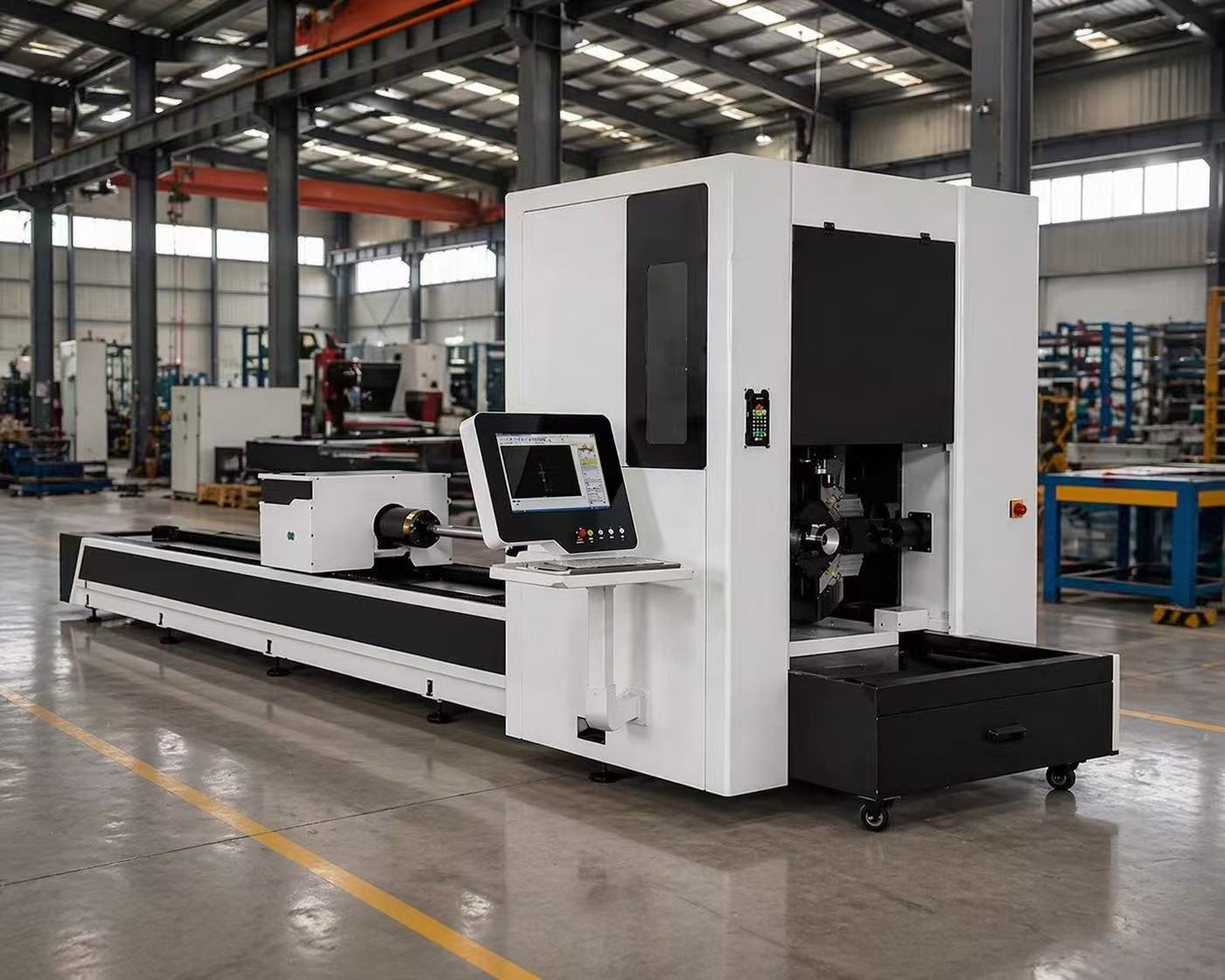
A tube laser cuts round, square, oval and rectangular stock — the same profile you would otherwise send to a saw, a mill or a punch, one operation at a time. The beam has no tooling to change per profile: a slot, a hole, an angled end or a notched branch all come out of the same setup, which is why tube lasers have largely replaced the saw-plus-mill cell on mixed structural work.
The difference from sheet cutting is in how the part behaves. A sheet lies on the table and is held down; a tube is held at its ends and rotates. Every accuracy claim on a tube machine is really a claim about the chuck.
Specifications
| Item | Standard specification |
|---|---|
| Laser power | 1500W / 3000W / 6000W |
| Tube diameter | 20 mm - 200 mm |
| Tube profiles | Circular, square, oval, rectangular |
| Rotation speed | 80 rpm |
| Maximum acceleration | 0.8 g |
| Positioning accuracy | +/-0.05 mm |
| Repeat positioning accuracy | +/-0.05 mm |
| Total weight | Over 13 t |
| Total power consumption | 18.3 - 41 KVA |
| Working voltage | 380V 50Hz / 380V 60Hz / 220V 60Hz / custom |
| Cooling | Water-cooled |
The above are standard machine models. Special models can also be customized.
The chuck is the machine
On a tube laser, the chuck decides whether the slot lands where the program put it. Two chuck systems are specified on this machine, and they do different jobs.
Full-stroke pneumatic chuck
The fully automatic dual pneumatic chuck clamps across the full 15-220 mm stroke without changing claws — one setup covers the whole diameter range, so a job that mixes 20 mm round with 150 mm square tube never stops for a claw change. The single-claw design carries high thrust and strong load capacity while keeping high rigidity, which is what stops the tube slipping off the L-shaped claw under cutting load.
The rear chuck can advance into the front chuck, reducing the processing allowance — less unusable remnant at the tail of every tube, and higher efficiency on short parts. If your work needs a larger envelope, a custom 360 mm diameter chuck is available.
Full-trip chuck (drive end)
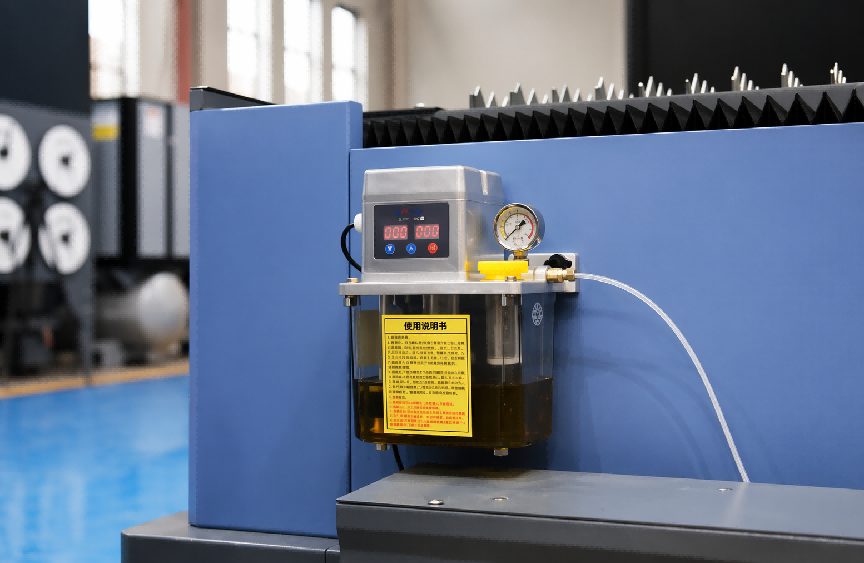
The drive-end chuck is an integrated sealed design — dust and impurities stay out, which is what keeps cutting precision and chuck life stable in a real workshop. A built-in side-inlet air cylinder makes installation simple and the clamping range wide. The four-jaw rail drive runs stable at 0.01 mm repeatability and up to 200 rpm, and the front chuck can retract to clear the loading path, reducing tail waste on short parts.
Automatic loading
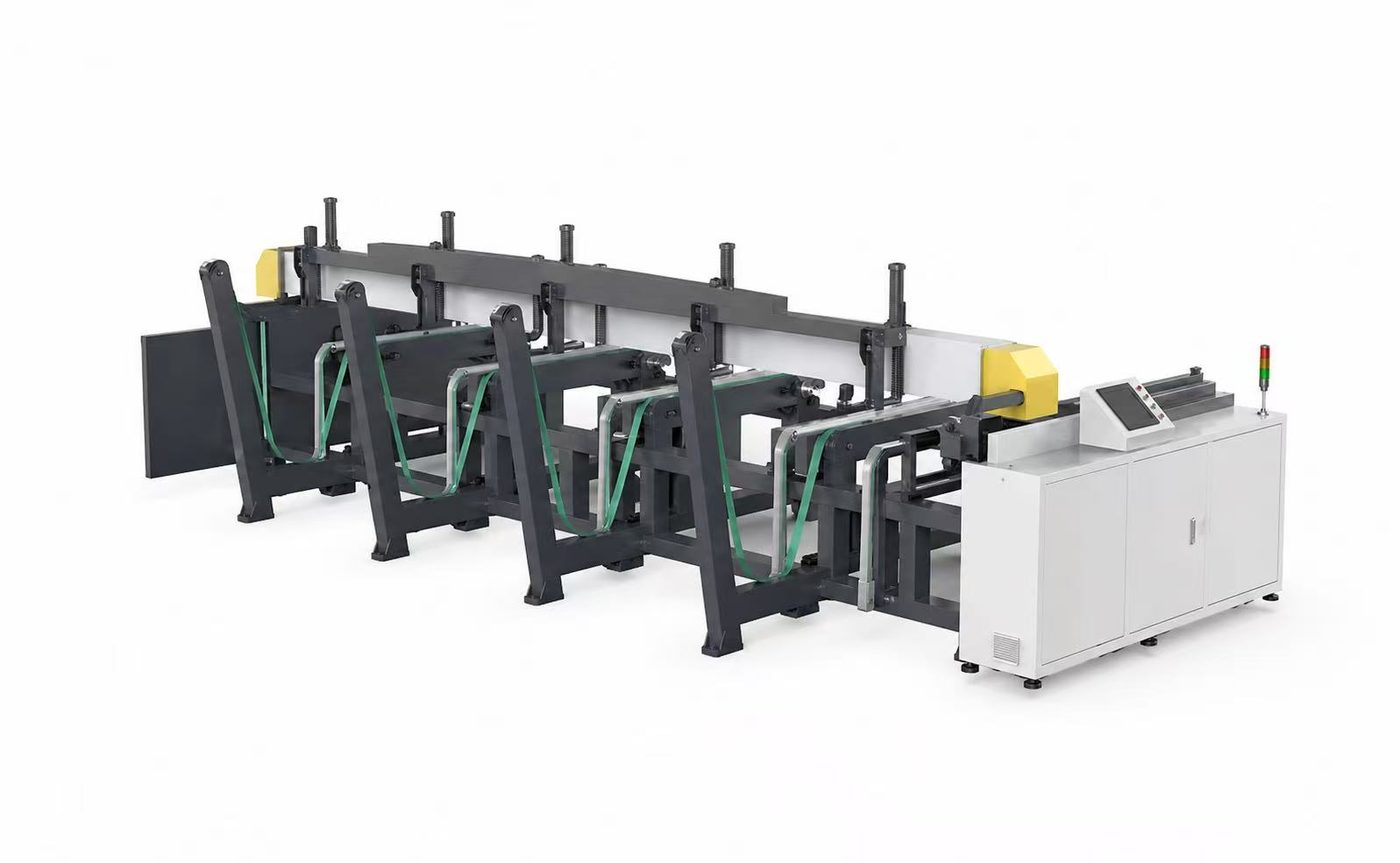
For production work, the automatic loading system feeds tube stock to the chuck without manual handling: positioning stays accurate, cut quality stays stable, material waste drops, and the machine runs safely through a batch — the option to cost when tube volume justifies taking the operator off the loading end.
What it cuts
Round, square, oval and rectangular tube from 20 mm to 200 mm — rail and frame sections, rectangular enclosures and brackets, oval decorative and architectural profiles. Slots, holes, angled ends, notches and branch cuts all come out of one setup, and bevel profiles for welded joints can be cut in a single pass where that option is fitted.
Control and shared systems
The control is the same professional PLC industrial computer and graphical interface as the sheet machines, running the same cutting software — and the same software cuts round tube and flat sheet with identical programming, including intersecting-line (joint-cut) cutting. A shop that runs both a tube machine and a sheet machine programs them the same way.
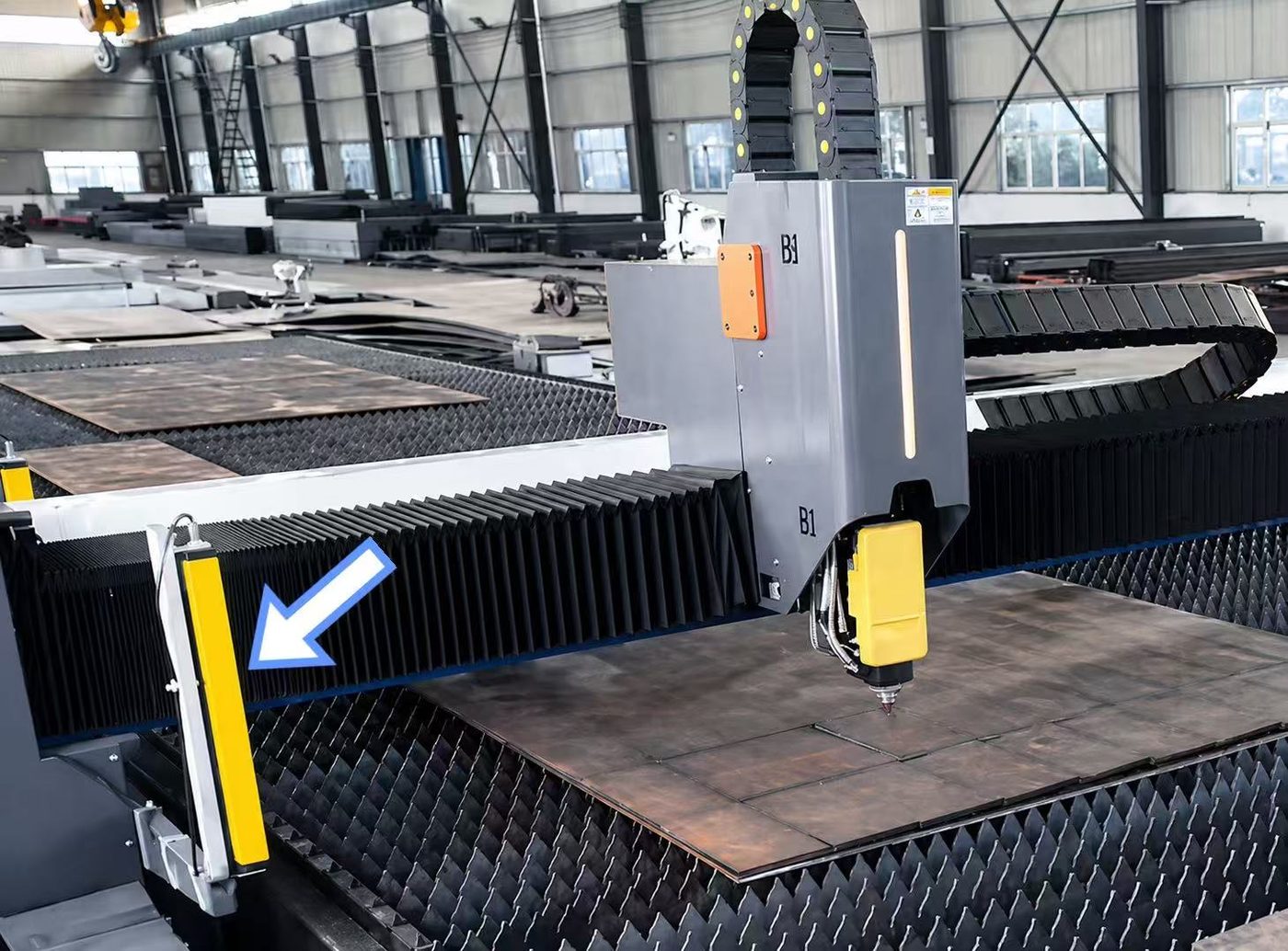
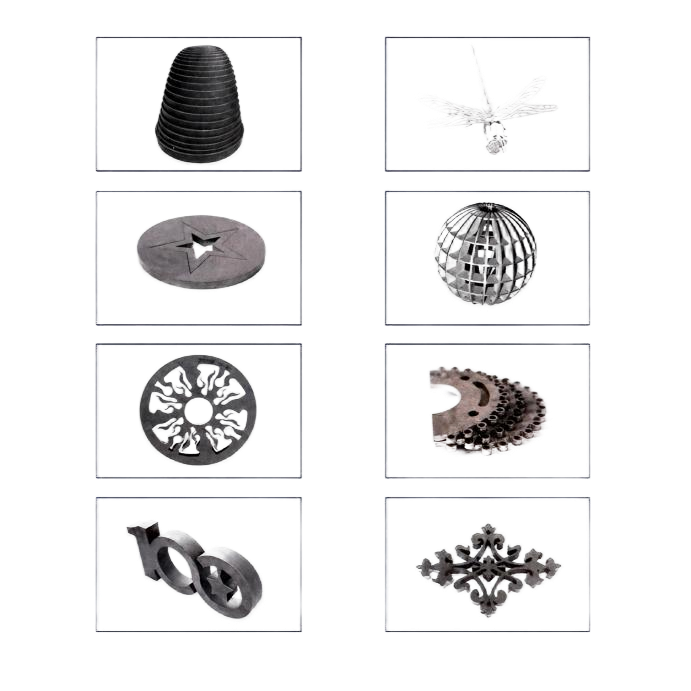
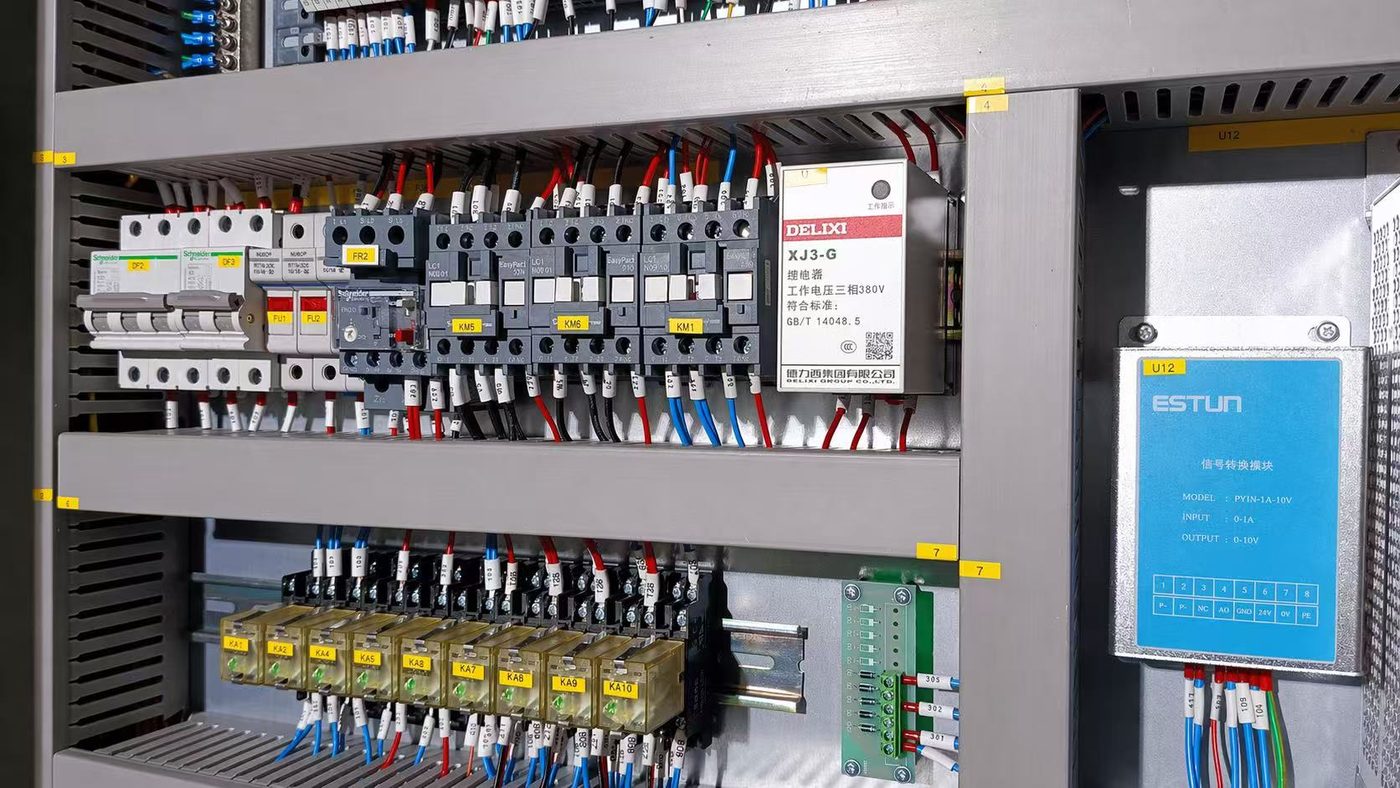
The rest of the machine is the shared platform: the same finite-element-analysed, heat-treated manganese steel beam, the same stress-relieved welded bed, the same selectable Raycus / n-Light / IPG laser sources from 1000W to 20000W, the same dual-temperature chiller and zoned dust extraction, and the same Schneider-class electricals. The full component story is on thefiber laser cutting machine page.
Utilities and installation
Total power draw is 18.3-41 KVA depending on configuration, and the machine weighs over 13 tonnes — the floor loading and foundation are part of the specification, not an afterthought. We supply the foundation drawing and you build the foundation; our engineers install and commission on site with your cooperation (lifting equipment, water, electricity on your side), train your operators free of charge during commissioning, and both parties accept the machine jointly against the signed technical agreement.
The compressed air supply does real work on this machine: assist gas for the cut, clean air for the optics, and the air that drives the chuck cylinders.
Questions buyers ask
What tube sizes and profiles can it cut?
Round tube from 20 mm to 200 mm diameter, in circular, square, oval and rectangular profiles. The profile range covers the structural and furniture stock most shops run — round and square for frames and rails, rectangular for enclosures and brackets, oval for decorative and architectural work.
What is the chuck range, and do I need to change claws for different diameters?
No. The fully automatic dual pneumatic chuck clamps across the full 15-220 mm stroke without changing claws. The single-claw design delivers high thrust and strong load capacity while keeping high rigidity, which stops material slipping off the L-shaped claw under load. If your work needs a larger envelope, a custom 360 mm diameter chuck is available on request.
Why does the rear chuck matter?
The rear chuck can advance into the front chuck, which reduces the processing allowance — less material left in the remnant at the end of the tube, and higher efficiency on short parts. On the loading side, the front chuck can retract to clear the way, again cutting tail waste. On a tube job, remnant is real money: every millimetre of unusable tail on every tube is scrap you pay for.
How accurate is it?
Published figures are +/-0.05 mm positioning accuracy and +/-0.05 mm repeatability. The chuck itself runs at 0.01 mm repeatability with a maximum rotation speed of 200 rpm, on a four-jaw rail drive — the numbers that decide whether a slot lands where the program put it on a rotating part.
What are the power and installation requirements?
Total power consumption is 18.3-41 KVA depending on configuration, and the machine weighs over 13 tonnes, so the floor and the foundation matter. Supply is 380V at 50 or 60 Hz, 220V 60 Hz or custom voltage, water-cooled — the same utility set as the sheet machines: power, water for the chiller, and compressed air for the pneumatics and assist gas.
Can it cut sheet as well as tube?
This machine is built for tube. If you need both processes on one bed, the sheet and tube laser covers both — and the control software is the same on either machine, so the programming does not change when you move between them.
What comes with the machine, and what is the warranty?
The machine plus a consumables starter set (10 lenses, 10 nozzles, 1 ceramic body, toolbox) and the full documentation set — packing list, certificate of conformity, electrical and mechanical manuals, system documentation, electrical schematics and foundation drawing. The warranty is a three-year quality guarantee from acceptance under the three-guarantee policy, with wearing parts excluded, and lifetime service at cost after that. Installation, commissioning and free operator training at your site are included as on the sheet machines.
Related
- Fiber laser cutting machine — the sheet side: 1500W-12000W, areas to 6 x 1.5 m.
- Sheet and tube laser cutting machine — both processes on one bed.
- CNC hydraulic press brake — the forming side of the same workflow.
- Importing machinery from China — freight, duty and lead time.
Pending input from the factory: Photographs of the specific chuck configuration quoted, sample tube cuts (profile, wall thickness, feature), and per-machine test report.
Ask about the laser tube cutting machine
Send the part you need to bend and we will come back with a configuration and a quote.