Pan and box brakes
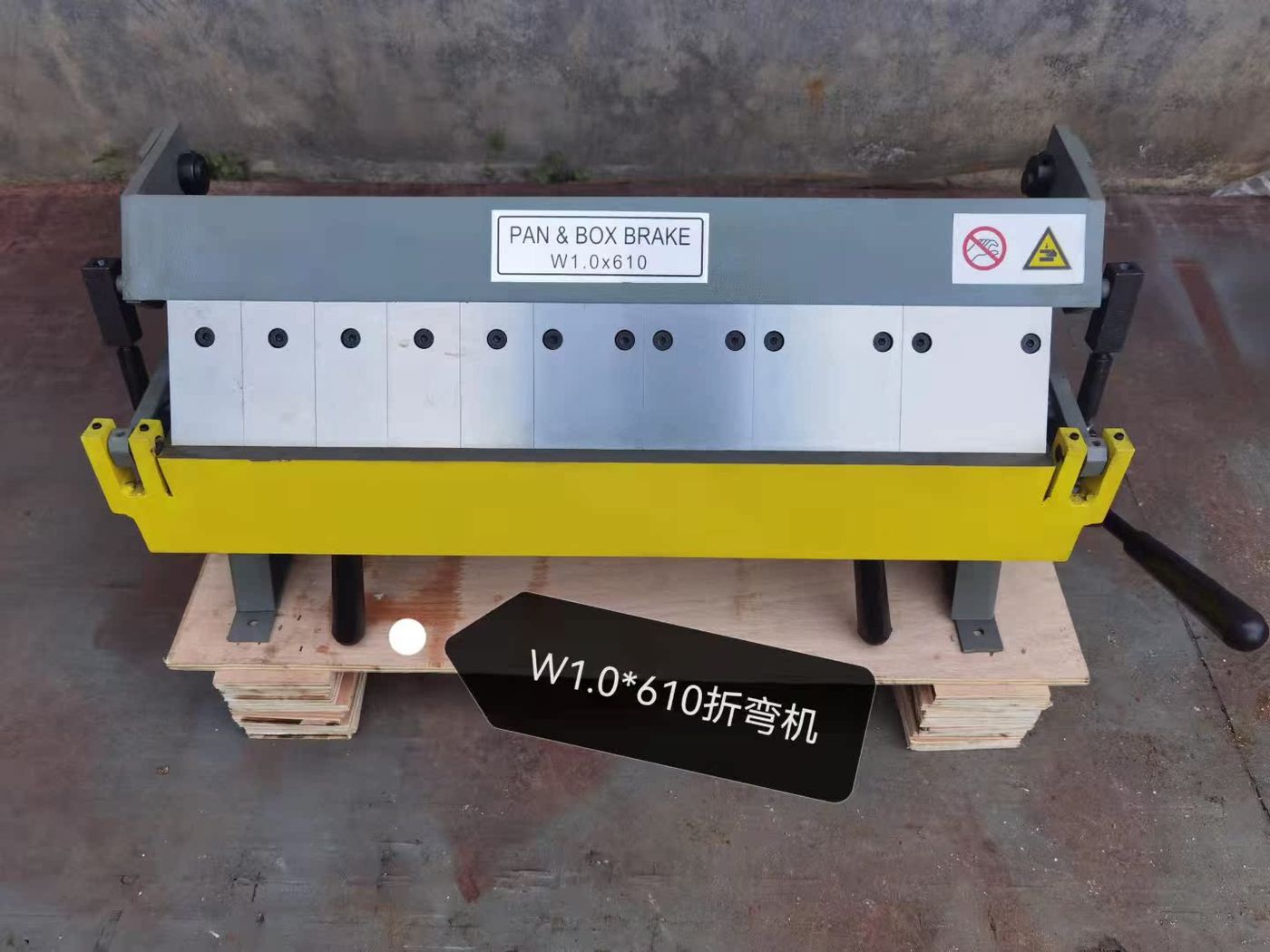
Pan and box brakes — also known as finger brakes — bend sheet metal into pans, boxes and enclosures using removable fingers that allow partial bends. A standard brake cannot reach three sides of a box; a finger brake can. Bench models from 305 mm up to floor-standing widths.
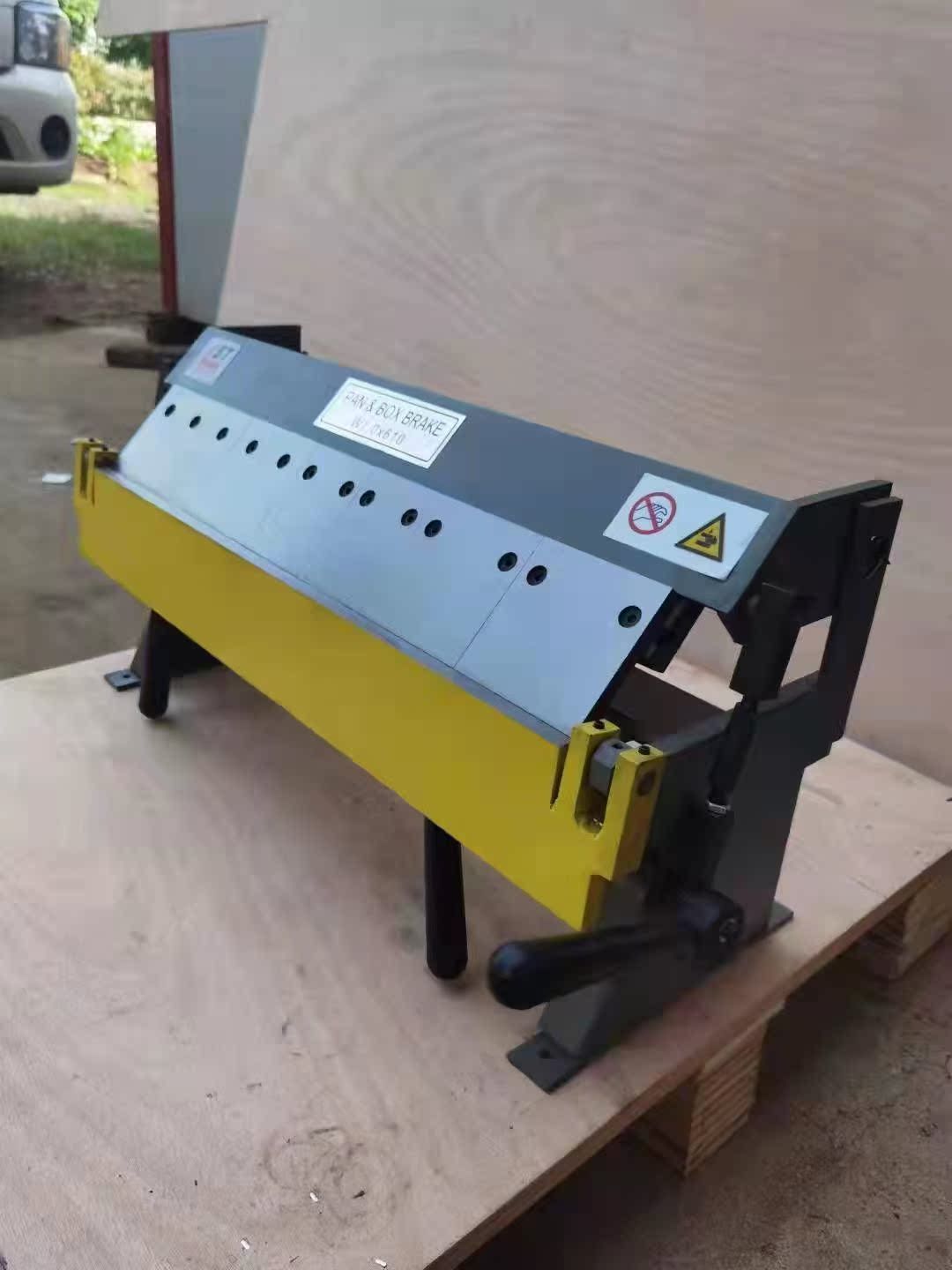
How a finger brake works
A box and pan brake is a specialised press brake designed to form sheet metal into three-dimensional shapes, such as pans or boxes, using adjustable "fingers" that allow partial bends. Unlike standard brakes limited to linear bends (V or U shapes), pan brakes can create intricate geometries by repositioning these fingers.
- Table/base: the flat surface where the metal sheet is placed
- Clamp: a bar that secures the metal against the table during bending
- Fingers: removable segments (upper and/or lower) that define the bend area and enable complex shapes
- Apron: the hinged plate that applies force to bend the metal
305 mm pan and box brake
The 305 mm designation refers to the bending length — the machine handles sheet metal up to 305 mm (12 inches) wide. It is ideal for small workshops, prototyping and custom fabrication:
| Parameter | Specification |
|---|---|
| Bending length | 305 mm (12 inches) |
| Material thickness | Up to 1.5 mm (16 gauge) mild steel / 2.0 mm (14 gauge) aluminium |
| Bend angle | 0°–135° adjustable with angle gauge |
| Finger width | 25 mm, 50 mm segments (customisable for partial bends) |
| Clamping force | Manual screw or lever clamps |
| Weight | 25–40 kg (portable for bench-top use) |
| Frame material | Cast iron or reinforced steel |
Pedal manual brake
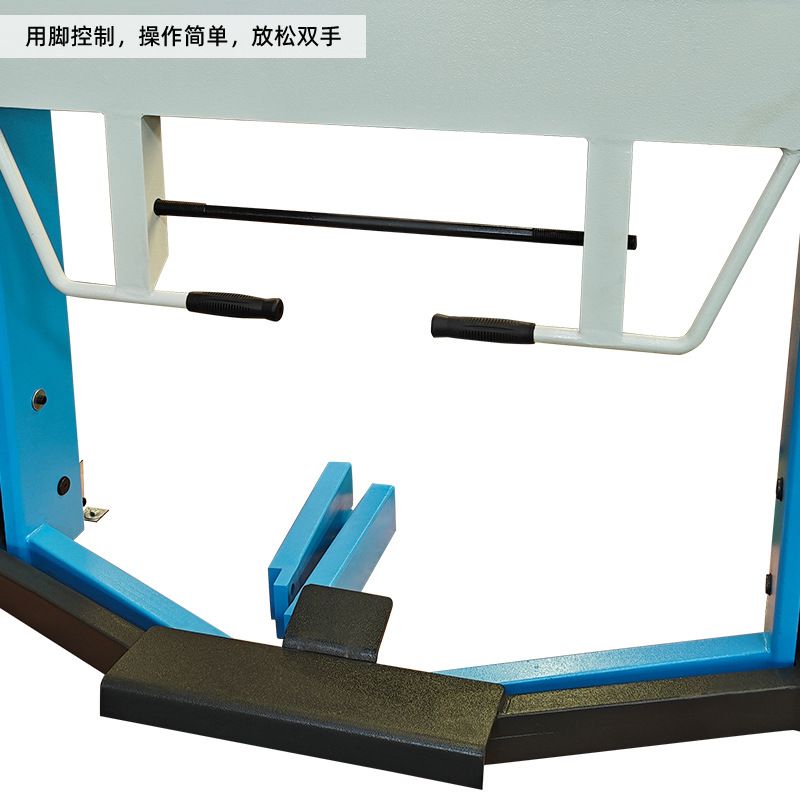
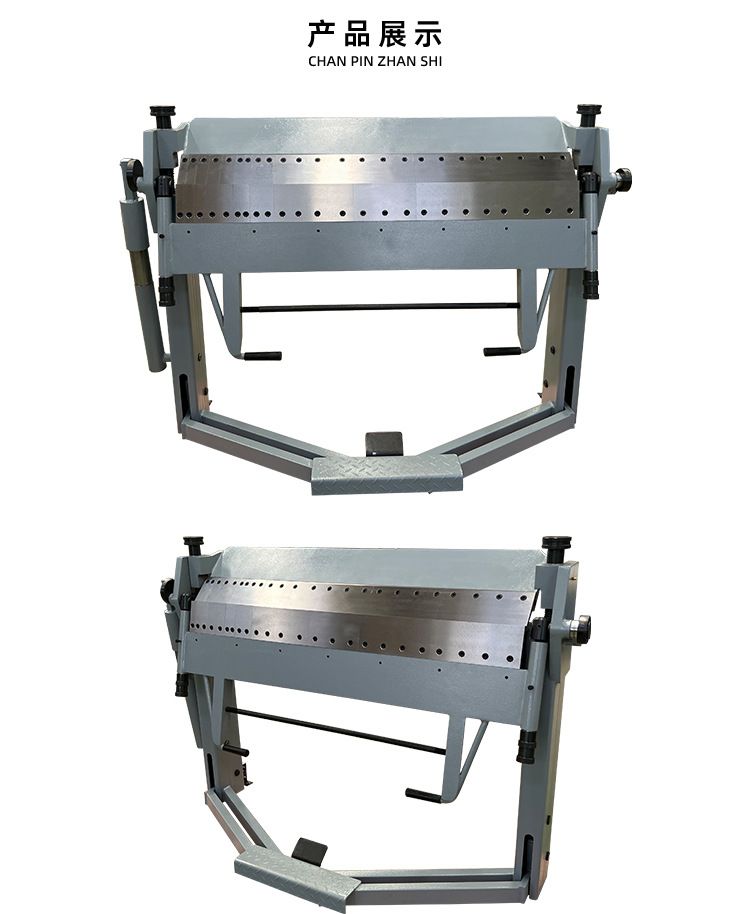
A pedal manual brake is operated by a foot pedal, freeing the operator’s hands to position and secure the workpiece. It uses a lever-and-clamp system to create precise bends in sheet metal, eliminating the need for hydraulic or electrical power:
- Hands-free operation: foot pedal control improves safety and efficiency
- Portability: compact, lightweight design for easy transport
- Cost-effective: no reliance on electricity or complex maintenance
| Material | Max thickness | Max width |
|---|---|---|
| Mild steel | 2.0 mm (14 gauge) | 1,000 mm (39 in) |
| Aluminium | 3.0 mm (10 gauge) | 1,200 mm (47 in) |
| Stainless steel | 1.5 mm (16 gauge) | 800 mm (31 in) |
| Copper / brass | 2.5 mm | 1,000 mm (39 in) |
- Bend length: matches the width capacity (up to 1,200 mm)
- Bend angle: 0°–135° with angle markers (±1° accuracy)
- Clamping force: manual screws or lever clamps secure the workpiece
- Tooling: interchangeable V-dies for sharp bends or radius dies for curves; adjustable back gauge for repeatable bends (±0.5 mm); hardened steel tooling (HRC 50–55)
- Construction: reinforced steel or cast iron frame, 50–150 kg, 1,000–1,500 mm footprint
Manual metal folder with segments
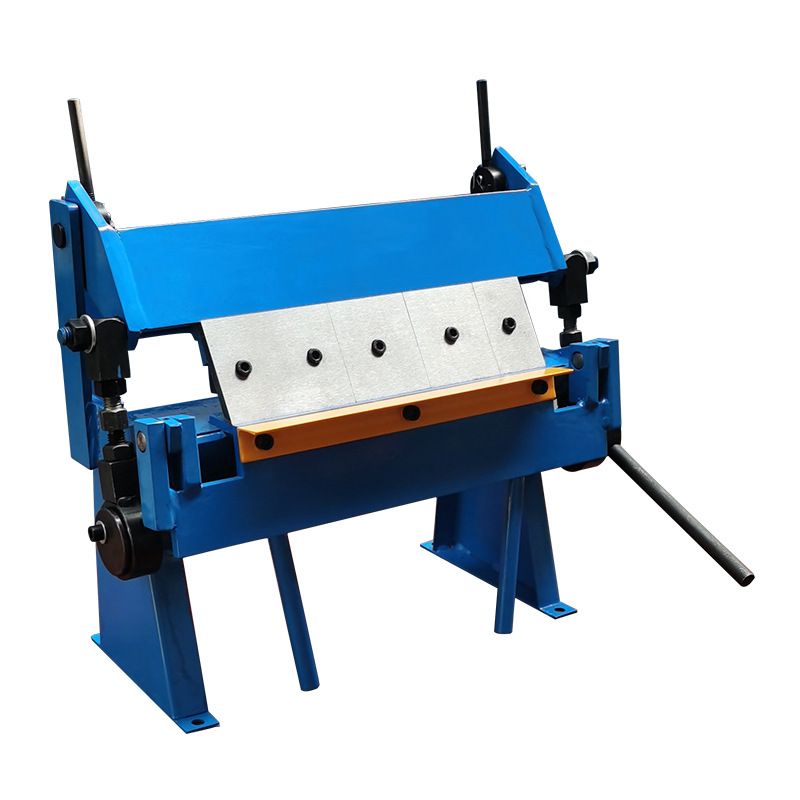
The segmented folder takes the finger principle the whole way: the bending beam is built from interchangeable tool segments.
- Material compatibility: aluminium, stainless steel, galvanised sheets and copper, 1.2–2.5 mm depending on model
- Bending length: 630–2540 mm, with segmented tooling allowing localised adjustments — multi-angle bends or curved edges without repositioning the workpiece
- Segment design: high-strength alloy blades (T10 steel) with 8-edge rotation, reducing downtime for blade maintenance
- Accuracy: integrated mechanical stops and ±0.1 mm precision ensure repeatability
- Frame: nodular (ductile iron) cast, renowned for vibration absorption and structural integrity — minimises deflection even on harder metals
- Ergonomics: manual lever systems with force-multiplied mechanisms reduce operator fatigue; adjustable foot pedals for hands-free clamping on some models
Applications
- HVAC and ductwork: pans, boxes, enclosures and duct fittings with flanges a standard brake cannot reach
- Automotive: brackets, mounts, exhaust hangers, chassis parts; body panel flanges on fenders, hoods and doors
- Advertising and signage: metal lettering with sharp edges or rounded contours; rapid prototyping of custom logos
- Electrical enclosures: precise bends for airtight seals and structural compliance
- Automotive prototyping: low-volume brackets, trim and chassis components where CNC automation is cost-prohibitive
Maintenance
- Routine lubrication of hinge points and sliding components
- Regular inspection of segment edges for chipping; rotate blades as needed
- Keep workpieces securely clamped to prevent slippage
- Keep the frame anchored and level for accurate bends
Ask about the pan and box brakes
Send the part you need to bend and we will come back with a configuration and a quote.